Hi everyone,
A 66-year-old man with kidney failure received a kidney from a gene-edited pig, and it kept him off dialysis for 271 days. When it failed and was removed, a human kidney went in and worked immediately, with no sign the pig organ had turned his immune system against human tissue. I also found a few other studies I thought were interesting and useful for staying healthy: how fast you walk may matter as much as how many steps you take, a better diet after a diabetes diagnosis tracking with longer life, obesity aging male brains far harder than female ones, and weight training lowering depression scores in older adults. Plus a solo episode on the Alzheimer’s gene, APOE4, and why evolution never deleted it.
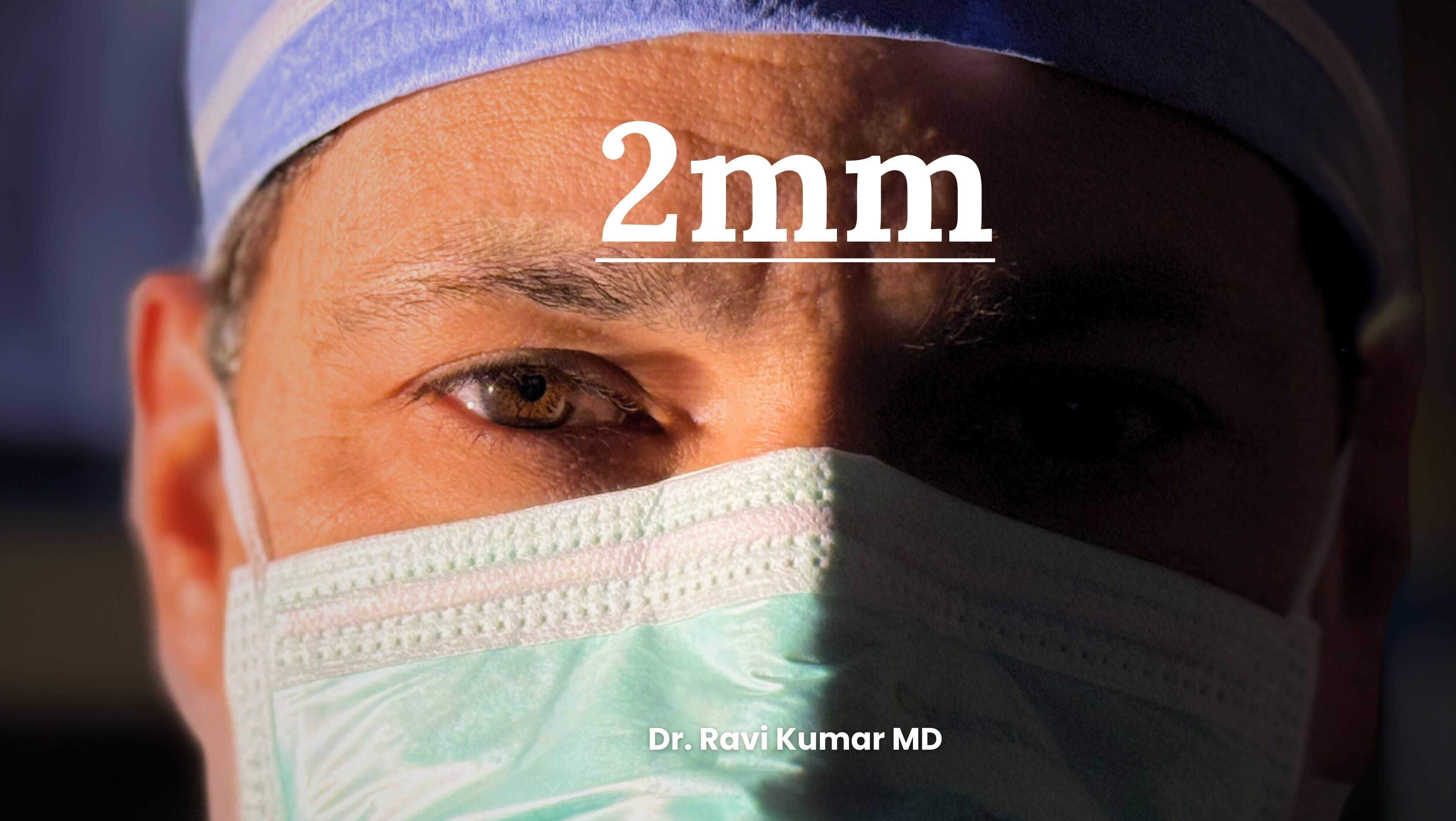
My book, 2mm, is almost here. It is the story of seven years inside the operating room, where every decision is measured in millimeters and every millimeter matters. If you want to be the first to know when it is available, leave your email at 2mmbook.com.
This Week’s Podcast Spotlight
Episode 71: The Science of APOE4: Why Evolution Kept the Alzheimer’s Gene
APOE4 is the strongest common genetic risk factor for Alzheimer’s disease, about one in four people carry a copy, and I am one of them. The question I take apart in this solo episode is why hundreds of thousands of years of natural selection never removed it. The answer is that E4 is not the mutation, it is the original version of the gene, and it still behaves like an advantage where infection is heavy. Among the Tsimane of the Bolivian Amazon, carriers with a high parasite burden held their cognition while non-carriers declined, and carriers ran roughly 30 percent lower baseline C reactive protein. I also spend a good chunk of the episode on the statistic everyone gets wrong. The famous 14.9 odds ratio is not a 15-fold risk. Lifetime risk by age 85 runs about 51 percent for men with two copies and 60 percent for women.
Four points from this one:
- APOE4 is the ancestral version, not a mutation. The chimpanzee APOE gene lines up closest with human E4, which makes E3 and E2 the newer arrivals, with E3 gaining ground over roughly the last 200,000 years.
- An odds ratio is not your lifetime risk. The 14.9 figure from a 1997 meta-analysis gets repeated as though two copies means 15 times the risk. The number that answers your actual question is lifetime risk, and it is far lower.
- One lost night raises amyloid. In 20 healthy adults, a single night of sleep deprivation raised amyloid about 5 percent in the thalamus and hippocampus, the regions the brain clears during deep sleep.
- Hearing aids are the one randomized win. The ACHIEVE trial found hearing aids cut the rate of cognitive decline roughly in half in older adults already at higher baseline risk.
This Week in Health Science
Five studies from this week’s research, and I think you will find a few of them practically useful.
A Gene-Edited Pig Kidney Kept One Man Off Dialysis for 271 Days, and a Human Kidney Still Worked Afterward

There are two ways to survive kidney failure: dialysis several times a week, or a transplant, and far more people are waiting than there are human kidneys. Surgeons at Massachusetts General gave a 66-year-old man with no suitable living donor a kidney from a pig whose genome had been edited three ways, and it kept him off dialysis for 271 days. It did eventually fail, through tiny clots choking the kidney’s smallest vessels, an injury the standard rejection tests never flagged. The part that matters for everyone else came next. Eighty-two days later he received a human kidney from a deceased donor, and it worked immediately, with his anti-HLA antibodies unchanged over 231 days. The long-standing fear was that pig tissue would prime the immune system and cost someone their shot at a human organ. Here it did not, in one patient, under an FDA expanded access pathway rather than a trial.
Key finding: A gene-edited pig kidney kept a 66-year-old man off dialysis for 271 days, and the human kidney he received 82 days after it was removed worked immediately, with no sign of immune sensitization across 231 days of follow-up.
Under 5,000 Steps a Day at 80 Steps a Minute Tracked With 28 Percent Lower Death Risk in 64,743 Adults

The 10,000 step target came from a 1960s Japanese pedometer campaign rather than from evidence, and this study is a decent argument for letting it go. Researchers followed 64,743 UK adults wearing wrist trackers for about eight years and looked at step count and walking pace together instead of separately. Pace was measured as the average steps per minute during your busiest 30 minutes of the day, and those minutes do not have to be consecutive. The lowest risk group took 7,500 to 10,000 steps at roughly 100 steps a minute, about 43 percent lower risk of dying. The number worth holding onto sits below that: people logging under 5,000 steps a day still had about 28 percent lower risk when their best half hour hit 80 steps a minute. This is observational, and early illness slows people down before it kills them.
Key finding: Among 64,743 adults tracked for eight years, fewer than 5,000 steps a day at 80 steps per minute came with about 28 percent lower death risk, and 5,000 to 7,500 steps at a gentle 60 steps per minute with about 30 percent. Two very different days of walking, similar benefit.
Improving Your Diet After a Type 2 Diabetes Diagnosis Tracked With Up to 37 Percent Lower Death Risk

The question after a diabetes diagnosis is whether the food from that point forward still changes anything, or whether the damage is already done. Researchers followed 7,795 US health professionals for up to 24 years after diagnosis, updating their diets every four years and scoring each person against eleven different healthy eating patterns. All eleven pointed the same direction. The people who improved their diets the most after diagnosis had up to about 37 percent lower risk of dying than those who improved the least, and the benefit showed up mainly in cardiovascular deaths rather than cancer deaths. The spread between the best pattern and the weakest was smaller than the gap between eating well and eating poorly, which argues against hunting for the one correct diabetes diet. It is observational, and people who overhaul their diet tend to quit smoking and start walking at the same time.
Key finding: Across 7,795 adults followed up to 24 years after a type 2 diabetes diagnosis, the people who improved their diets the most afterward had up to about 37 percent lower death risk, and all eleven healthy eating patterns tested were linked to living longer.

Sixteen Years of Obesity Raised the Odds of an Older-Looking Brain 90 Percent in Men and 25 Percent in Women

Brain age is something you can measure. An MRI goes into a model trained on thousands of scans, and the model estimates how old that brain looks compared with the birth certificate. In 35,092 UK Biobank adults with 16 years of body measurements behind them, staying obese that entire time raised the odds of a brain scanning older than its owner by about 90 percent in men and about 25 percent in women. Same weight pattern, roughly four times the cost in men. Genes mattered less than the trajectory did, and the number that moves is the useful one: people who came out of obesity during follow-up had 30 percent lower odds in men and 18 percent lower in women, including those carrying high genetic risk. Brain age acceleration is a research marker, not a diagnosis, and nobody was followed forward to see who developed cognitive problems.
Key finding: Sixteen years of stable obesity raised the odds of accelerated brain aging about 90 percent in men against about 25 percent in women, while moving out of obesity tracked with 30 percent lower odds in men and 18 percent lower in women.
Twice-Weekly Weight Training Lowered Depression Scores in 91 Older Adults With Small Vessel Brain Disease

Cerebral small vessel disease is damage to the tiny vessels deep inside the brain. It builds with age and blood pressure, it is one of the common reasons older people start losing a step mentally, and depressive symptoms travel with it. Ninety-one adults averaging 75 years old, all with small vessel disease and mild cognitive impairment, were randomised to twice-weekly progressive weight training or to a stretching and balance program for a full year. The lifters finished 4.25 points lower on a 10-item depression scale, against a starting average of 7.45, so a large share of the symptoms they came in with. The shape is the interesting part: the gap was 3.17 points at six months and wider at twelve, the opposite of how most mood interventions behave. This was a secondary analysis of a small single-site trial, so it is a strong signal rather than a settled result.
Key finding: Twelve months of twice-weekly progressive weight training left 91 older adults with small vessel brain disease 4.25 points lower on a depression scale than a supervised stretching and balance group, and the gap was still widening at a year.
Stay curious. Stay skeptical. And stay healthy.
Dr Kumar