Hi everyone,
Fifty-three people with Crohn’s or colitis happened to also have oral thrush, and treating that thrush two different ways turned into an accidental experiment. Both treatments cleared the thrush equally well, but only one of them did anything for the bowel disease. The patients who swallowed the antifungal pill, which travels through the bloodstream and reaches the intestine, had less Candida in the gut and better Crohn’s and colitis activity scores. The patients who used the antifungal mouthwash, which never leaves the mouth, saw no change in their bowel disease at all. I also found a few other studies I thought were interesting and useful for staying healthy: omega-3 and aspirin matched antibiotics for severe gum disease, a Mediterranean diet paired with good sleep tracked with less lung cancer, milk sugar doubled liver fat production, and the newer shingles vaccine came with less heart disease. Plus a podcast on severe mental illness as a brain energy problem.
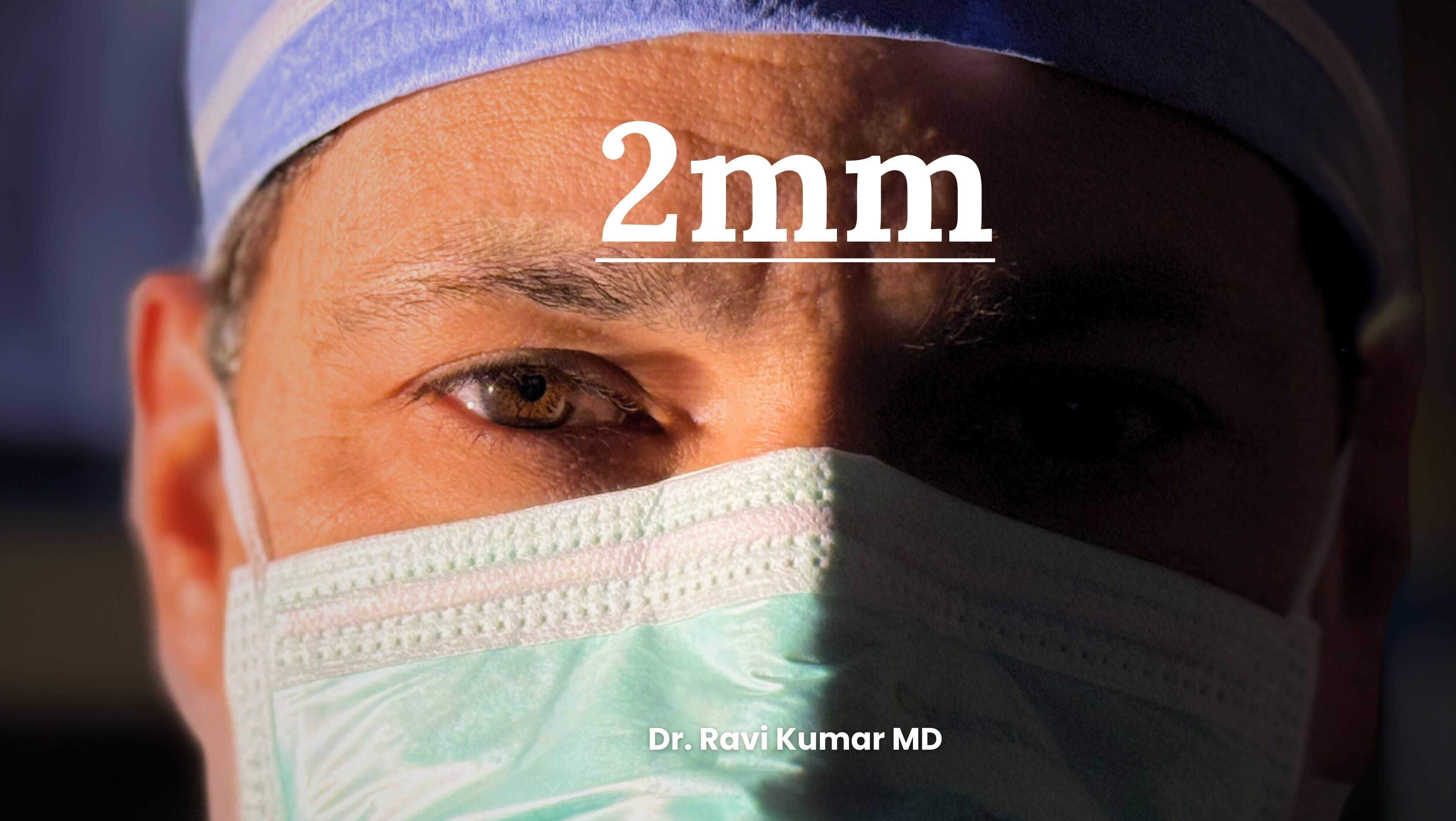
My book, 2mm, is almost here. It is the story of seven years inside the operating room, where every decision is measured in millimeters and every millimeter matters. If you want to be the first to know when it is available, leave your email at 2mmbook.com.
This Week’s Podcast Spotlight
Episode 70: The Science of Metabolic Psychiatry: How Ketones Feed a Starving Brain | Dr. Matt Bernstein
Metabolic psychiatry treats some severe mental illness as an energy problem in the brain. The hypothalamus, hippocampus, and amygdala need an insulin signal to pull glucose into their cells, so when those regions turn insulin resistant, the neurons that run mood, memory, and anxiety starve while glucose is plentiful everywhere else. Ketones get in without insulin, which is the whole premise. In a small Stanford pilot, every patient with schizophrenia or bipolar disorder who stayed fully adherent to a ketogenic diet reached remission, and a French inpatient series reported effect sizes above 3 on standard psychiatric scales, against roughly 0.35 for SSRIs and 0.5 to 0.6 for antipsychotics. Neither study had a control group. Dr. Matt Bernstein is a traditionally trained psychiatrist who spent years on inpatient units with medications and ECT, came to this after two of his three sons developed autoimmune encephalitis, and now runs Accord, a metabolic psychiatry program outside Boston.
Three takeaways from this one:
- Some brain regions need insulin to eat. The hypothalamus, hippocampus, and amygdala need an insulin signal to take in glucose, so a person’s standard labs can look fine while those specific neurons run short of fuel.
- Ketones skip that gate. They enter cells without any insulin signal, which is why the switch into ketosis can act quickly on the regions that govern mood, memory, and anxiety.
- Three months is the honest timeline. That is roughly how long he tells patients they need in ketosis before they can know whether it is working, and he says he has yet to see someone reach that mark and feel nothing.
This Week in Health Science
Five studies from this week’s research, and I think you will find a few of them practically useful.
Only the Antifungal That Reached the Gut Improved Crohn’s and Colitis in 53 Patients

The microbiome conversation is almost entirely about bacteria, but fungi live down there too, and some strains of the yeast Candida albicans make a toxin that damages the cells lining the intestine. This study enrolled 53 people with mild-to-moderate ulcerative colitis or Crohn’s who also had oral thrush. Eighteen swished and spat nystatin, which never leaves the mouth. Thirty-five took fluconazole, a pill that reaches the intestine. Both cleared the thrush equally well, so the drugs differ in exactly one useful way. Only fluconazole lowered gut Candida, and behind it bacterial diversity rose, butyrate-producing bacteria expanded, and disease activity scores improved across 8 weeks. The design is the catch: no randomization, no placebo, and everyone knew what they were taking. This earns a proper trial, not a prescription.
Key finding: In 53 IBD patients with oral thrush, only fluconazole, the antifungal that reaches the intestine, lowered gut Candida, raised bacterial diversity, and tracked with better disease activity over 8 weeks. The nystatin mouthwash cleared the same thrush and changed nothing in the gut.
Omega-3 and Low-Dose Aspirin Matched Antibiotics for Severe Gum Disease Over a Full Year

Severe gum disease is not sore gums: the tissue and bone holding your teeth break down and leave deep pockets around the roots. Deep cleaning is the standard fix, and when it is not enough, dentists have reached for metronidazole and amoxicillin for decades. Three Brazilian centers tested the opposite idea in 109 patients with stage III or IV periodontitis: calm the inflammation instead of killing more bacteria. A full year later, deep cleaning alone got 23.1 percent of patients to a strict treatment goal, adding 3 g of omega-3 with 100 mg of aspirin daily for six months got 57.7 percent, and antibiotics got 58.6 percent. That is roughly 3 people treated for 1 extra success. Stacking antibiotics on top of the supplements added nothing, at 57.1 percent. Everyone enrolled was a healthy non-smoker, and six months of daily aspirin raises bleeding risk, so this is a conversation with your physician, not a purchase.
Key finding: In 109 adults with severe gum disease, omega-3 plus low-dose aspirin brought 57.7 percent to the one-year treatment goal against 23.1 percent on deep cleaning alone, a gain of about 35 successes per 100 treated, and statistically indistinguishable from the 58.6 percent on antibiotics.
The Best Diet and Sleep Group Had 43 Percent Less Lung Cancer Across 192,034 Adults

Start with the absolute numbers, because the percentage oversells this. Lung cancer showed up in about 7 per 1,000 people in the worst combined diet-and-sleep group against about 3.5 per 1,000 in the best. It stayed uncommon either way. Researchers followed 192,034 UK Biobank adults for a median of 14 years, scoring Mediterranean diet adherence and a five-point sleep score: seven to eight hours a night, no insomnia, no snoring, no daytime dozing, and being a morning person. Diet and sleep each mattered on their own, and the best combined group sat about 43 percent below the worst. Lung cancer is a smoking story first, and smoking was adjusted for in only three crude buckets here, so residual confounding is a real limitation. Risk did fall step by step as both scores improved, and it did not show up for other common cancers.
Key finding: Across 192,034 UK adults over 14 years, the best combined Mediterranean diet and sleep group had about 3.5 lung cancer diagnoses per 1,000 people against about 7 per 1,000 in the worst group, a 43 percent lower risk in an observational study where smoking was only crudely adjusted for.
Milk Sugar Doubled Liver Fat Production and Matched Table Sugar in a 24-Adult Crossover Trial

Lactose has spent decades filed under the safe carbohydrates. The chemistry never quite supported that: lactose is glucose plus galactose, and galactose, like fructose, gets handled mainly by the liver. Twenty-four adults without obesity each drank 50 g of fat plus 100 g of carbohydrate on three separate visits, as maltodextrin, lactose, or table sugar, with liver fat production measured directly. Peak production was 11 percent after maltodextrin, 22 percent after lactose, and 23 percent after table sugar. The dose is everything here. Nobody drinks 100 g of lactose in one sitting with no protein, no fiber, and no meal around it, so this says nothing against a glass of milk or a bowl of yogurt. What it does dismantle is the shortcut that only fructose deserves attention. Where it matters in real life is protein powders and meal-replacement drinks sweetened with lactose powder.
Key finding: Given as a 100 g single dose with fat, lactose doubled peak liver fat production against a glucose control, 22 percent versus 11 percent, and was statistically indistinguishable from table sugar at 23 percent. That is a statement about how galactose behaves in the liver, not a warning about milk.
The Newer Shingles Vaccine Came With 9 Percent Less Heart Disease Burden Over 7 Years

Earlier research on the shingles vaccine and the heart compared vaccinated people against unvaccinated people, which is a trap: people who show up for vaccines also show up for blood pressure checks and refills, so the benefit could be the healthier person rather than the shot. This Oxford team got around it. The United States switched quickly from the live shingles vaccine to the recombinant one, so adults vaccinated just before the switch got one and those vaccinated just after got the other, and both groups were the kind of people who go get vaccinated. Over 7 years, the recombinant group carried about 9 percent less cardiovascular burden, measured as time lost to ischemic heart disease, heart failure, or ischemic stroke. The gap shrank as the years went on, and two authors disclose consultancy fees from GSK. Because both groups were vaccinated, this compares two vaccines, not a shot against no shot.
Key finding: Comparing adults 60 and older who got the recombinant shingles vaccine against those who got the older live vaccine, the recombinant group lost about 9 percent less time to heart disease over 7 years, with the effect shrinking as the years went on.
Stay curious. Stay skeptical. And stay healthy.
Dr Kumar