Hi everyone,
If you get reflux, when you lie down after dinner and which side you lie on both matter. In one Japanese study, people who went to bed less than 3 hours after dinner had about 7.5 times the odds of reflux disease. In another, lying on the right side after a meal added up to about twice as much reflux time as lying on the left.
I also looked at a few other everyday health questions I thought were useful. How hot a bath should be, and how long before bed, to help you fall asleep faster. Whether creatine improves memory, and why the usual 5 grams a day may be too little for the brain. Whether cherries cut gout attacks even if they do not lower uric acid. And whether red light therapy beats a fake device for chronic back pain.
On the podcast, neurologist Dr. Amelia Barrett explains why the wine or weather you blame for a migraine is only the last drop in a bucket, and what fills it.
I am a neurosurgeon, and I built an app to exercise your brain. Nine puzzles cover the nine domains of thinking: memory, language, numbers, space, attention, logic, and planning. New puzzles are generated every day, so there is a fresh set waiting for you every morning. They are fun and a little addictive, and they do not feel like work. They feel like a game. I play mine every morning with my coffee. Three games are free to play every day, with no sign-up.
This Week’s Podcast Spotlight
Episode 75: What’s Actually Causing Your Migraines (Neurologist Explains) | Dr. Amelia Barrett
Dr. Amelia Barrett is a Stanford-trained neurologist who spent 25 years in private practice and gets migraines herself. Her main idea is that the trigger you can name, like a glass of wine or a skipped meal, is only the last drip into a bucket. What fills the bucket is long-running biology. Genetic studies comparing about 100,000 people with migraine to 700,000 without have linked nearly 200 genes to it. She sorts them into four systems: brain chemistry, inflammation, energy production inside cells, and blood vessels. Her point is that your migraine type should shape the first preventive medicine you try. Years of trial and error can let the brain learn migraine as a habit. Only about 5 percent of people with migraine have been diagnosed and given migraine-specific medicine. This one is worth sharing with anyone who calls theirs “just a headache.”
Three practical points from Dr. Barrett:
- Melatonin may prevent migraines, not just help sleep. She points to studies where melatonin worked about as well as the drug amitriptyline for prevention, cutting about 2.7 migraine days a month. Her pick is 3 mg of extended-release melatonin.
- Magnesium glycinate with dinner. She aims for 400 to 500 mg a night, starting near 100 mg and building up slowly if your stomach objects.
- You do not need a formal diagnosis to act. If headaches interfere with your life, make you take medicine, or make you miss things, that is reason enough to look for the cause.
Want to go further? I did a full episode on magnesium and how it affects sleep and stress: Magnesium Explained: The Overlooked Nutrient Behind Energy, Sleep, and Stress Control.
This Week in Health Science
This week, five common health questions got full answers on the site, each pulling together the best available studies. I think you will find a few of them practically useful.
Lying on Your Right Side After Dinner Doubled Reflux Time Compared With Your Left

The usual advice is to wait 3 hours after eating before lying down, and studies back it up. In a randomized trial of 30 people with reflux symptoms, the same meal caused more nighttime reflux when eaten 2 hours before bed rather than 6. In a Japanese study of 441 people, going to bed less than 3 hours after dinner was linked to about 7.5 times the odds of reflux disease. That shows a link, not proof. Position matters too. In 20 healthy volunteers lying down after a high-fat meal, total reflux time was 231 minutes on the right side and 117 on the left. In a trial of 100 people with nighttime reflux, half wore a device that buzzed when they rolled onto their right side. Symptoms dropped by half or more in 44 percent of them, versus 24 percent with a fake device. If reflux wakes you at night, eat dinner earlier and sleep on your left side.
Key finding: Going to bed less than 3 hours after dinner was linked to about 7.5 times the odds of reflux disease, and the right side doubled reflux time compared with the left.

My book, 2mm, is almost here, and the first chapter is free to read right now. It is the story of seven years inside the operating room, where every decision is measured in millimeters and every millimeter matters. If you want to read the first chapter, go to 2mmbook.com.
A Warm Bath 1 to 2 Hours Before Bed Helped People Fall Asleep Faster
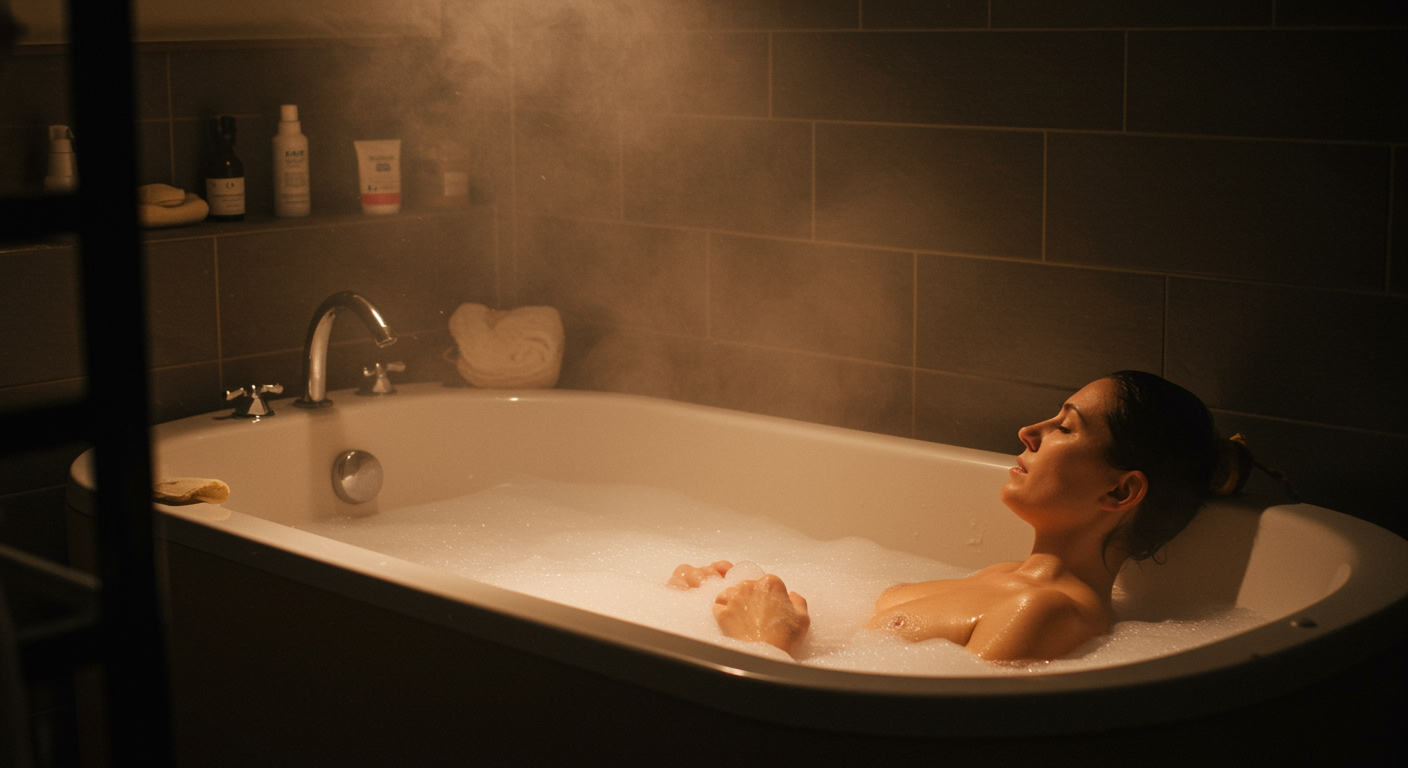
The sleep benefit of a bath is about temperature. Warm water sends blood to your hands and feet, and after you get out, your core temperature drops. That drop is part of how the body falls asleep. A meta-analysis pooling 13 studies looked at water at 104 to 108.5 °F (40 to 42.5 °C). Even 10 minutes of it, 1 to 2 hours before bed, shortened the time it took to fall asleep. In a randomized trial of 11 youth soccer players, a 10-minute warm shower before lights out helped them fall asleep 7 minutes faster. In a study of 23 adults, a long bath worked better than a quick shower. The gains are minutes, not hours. If you want to try it, finish a warm bath an hour or two before bed. If you are older or have heart trouble, keep the water warm rather than scalding and stand up slowly.
Key finding: Water at 104 to 108.5 °F (40 to 42.5 °C) for as little as 10 minutes, 1 to 2 hours before bed, helped people fall asleep faster.
Creatine Gave Memory a Small Boost, but the Usual 5-Gram Dose May Be Too Low for the Brain
Creatine is best known for building muscle, but your brain also uses it as a quick energy reserve. A 2024 meta-analysis of 16 randomized trials with 492 adults found that creatine improved memory. It did not improve overall thinking, or planning and decision-making. A separate review of healthy people found the memory gain mostly in adults aged 66 to 76, with almost no effect in people aged 11 to 31. Dose is the catch. Most people take 5 grams a day for muscle, and in a trial of 123 people, 6 weeks at that dose did not significantly improve memory. The studies that raised brain creatine used about 20 grams a day, and those doses have only been tested for days to weeks. Creatine also raises creatinine, a blood marker doctors use to judge the kidneys. If you take creatine, tell your doctor before blood work so a higher creatinine is not mistaken for kidney damage.
Key finding: In 16 randomized trials, creatine improved memory but not overall thinking, and 5 grams a day did little for memory in the largest single trial.
Cherries Were Linked to a 35 Percent Lower Risk of Gout Attacks, but Uric Acid Did Not Drop in a Gout Trial

Gout happens when uric acid builds up and forms sharp crystals in a joint, often the big toe. In a study of 633 people with gout, eating cherries over a 2-day period was linked to a 35 percent lower risk of an attack. Each person was compared with themselves, but the study was observational, so it shows a link, not proof. The trials since then are small. In a randomized trial of 50 people with gout, tart cherry concentrate at four different doses did not change uric acid or flares over 28 days. So if cherries help, calming inflammation is a more likely reason than lowering uric acid. A daily bowl of fresh or frozen cherries is a low-risk thing to add. Skip sweetened cherry juice, since its sugar can raise uric acid. If you take allopurinol for gout, keep taking it. Cherries are an add-on, not a replacement.
Key finding: Eating cherries over 2 days was linked to a 35 percent lower risk of a gout attack in 633 people, but no dose of tart cherry concentrate lowered uric acid in a 50-person gout trial.
Red Light Therapy for Back Pain Did No Better Than a Fake Device in the Best-Blinded Trial
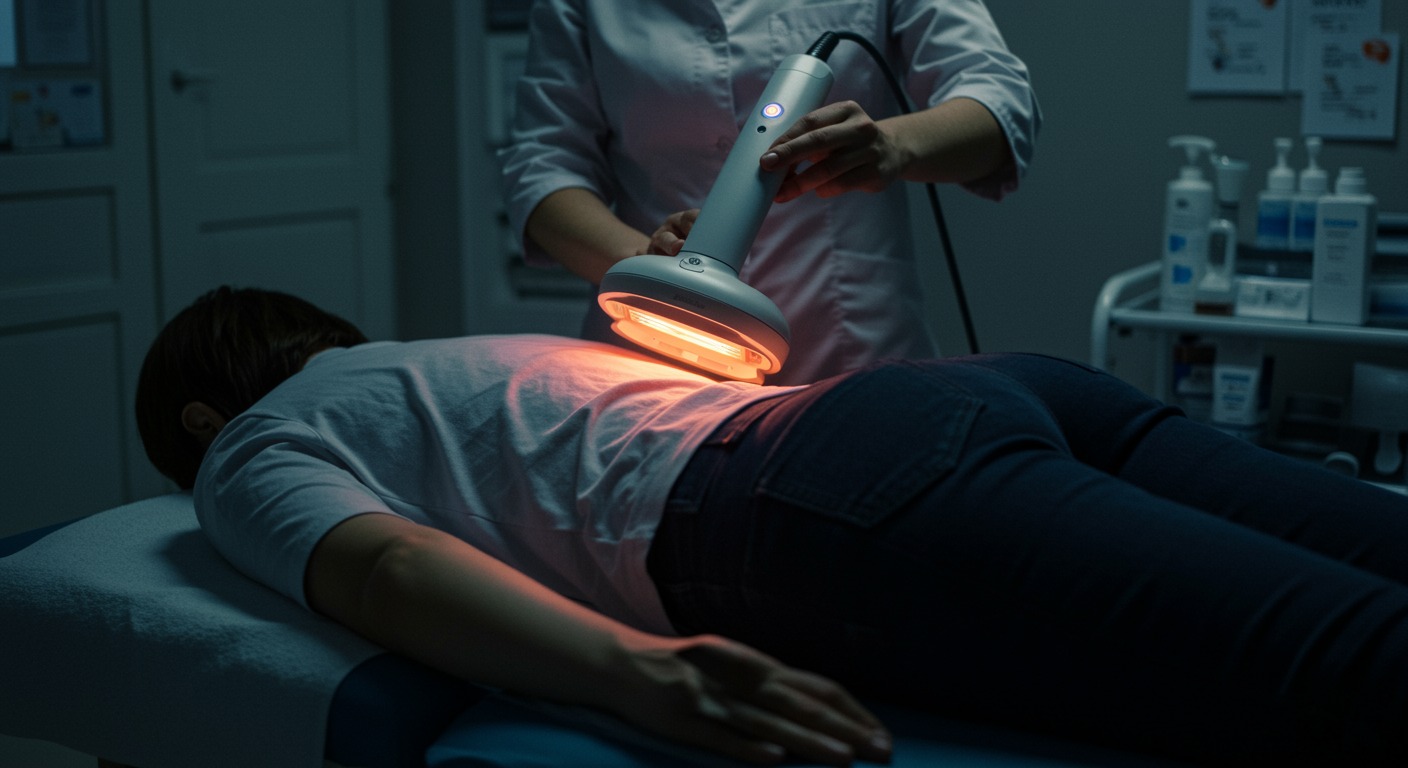
Red light therapy means shining low-power red or near-infrared light on the skin. For chronic low back pain, the reviews disagree. A meta-analysis of 15 trials with 1,039 people found pain fell up to 1.4 points more on a 10-point scale with light than with placebo. But in the most carefully blinded trial, 148 people with chronic back pain got 12 sessions over 4 weeks, and light did no better than placebo. The difference in pain was 0.01 points. No review found that light helped people move or function better, and it has not beaten exercise when the two were compared. It does look safe, as long as you protect your eyes. If a clinic offers red light for chronic back pain, treat it as an optional extra on top of an exercise program, not a replacement for one.
Key finding: In a 148-person trial where patients, therapists, and assessors were all blinded, red light therapy and a fake device differed by 0.01 points of back pain.
Stay curious. Stay skeptical. And stay healthy.
Dr Kumar