Hi everyone,
A lot of people describe their morning coffee as a “dopamine hit.” Brain scans say that is not what is happening. In a study of 20 adults, 300 mg of caffeine did not raise dopamine in the brain’s reward center. Caffeine works by blocking adenosine, a chemical that builds up while you are awake and acts as a brake on dopamine.
I also found answers to a few other questions I thought were useful. Does magnesium lower depression scores, and how fast? How much do 6-hour nights hurt your thinking? How much casein before bed does it take to boost overnight muscle building? And does hormone therapy after menopause reduce facial wrinkles, or only thicken the skin? On the podcast, Sambazon co-founder Travis Baumgardner explains why the açaí bowl looks nothing like what people eat in the Amazon, and he points out that the fruit itself has no sugar.
I am a neurosurgeon, and I built an app to exercise your brain. Nine puzzles cover the nine domains of thinking: memory, language, numbers, space, attention, logic, and planning. New puzzles are generated every day, so there is a fresh set waiting for you every morning. They are fun and a little addictive, and they do not feel like work. They feel like a game. I play mine every morning with my coffee. Three games are free to play every day, with no sign-up.
This Week’s Podcast Spotlight
Episode 76: Protect the Rainforest, Support Farmers, & Fuel Your Body | Acai | Travis Baumgardner
Açaí is the fruit of a palm that grows in the flood plains of the eastern Amazon estuary. It is a drupe, like an olive or a cherry, and 85 to 98 percent of it is pit. Travis Baumgardner co-founded Sambazon and has worked with the families who grow açaí for about 30 years. In the Amazon, people eat it warm and savory with fish, rice and beans. The sweet, cold bowl was invented in Rio, where the frozen pulp was blended with a sugar syrup spiked with guaraná. The fruit itself has no sugar. Its fats include oleic acid, the same fat found in olive oil. It is also loaded with polyphenols, plant compounds linked in observational studies to a lower risk of death. Partway in, I brought up a study showing açaí planted in cleared rows yields less than palms tended in the wild forest, and Travis said that matched what he has seen.
Three takeaways from this one:
- Buy unsweetened açaí. The fruit has no sugar of its own, so most of the sweetness in a typical bowl is added syrup. Travis blends unsweetened puree with avocado, blueberries and nut milk.
- Treat it as a fat and polyphenol food, not a dessert. Travis compares it to the Mediterranean diet in one fruit: olive oil-like fats plus polyphenols, held together by fiber. It fills you up like a meal.
- The organic label tells you only part of the story. It means no pesticides were sprayed. It does not tell you who picked the fruit, whether they were paid fairly, or whether forest was cleared to grow it.
This Week in Health Science
Five common health questions got full answers on the site this week, each pulling together the best available studies. I think you will find a few of them practically useful.
Caffeine Did Not Raise Dopamine in the Brain’s Reward Center in a 20-Person Brain Scan Study

In a brain scan study of 20 healthy adults, 300 mg of caffeine did not raise dopamine in the striatum, the brain’s reward center. Caffeine blocks adenosine instead. Adenosine builds up while you are awake, makes you sleepy, and acts as a brake on dopamine receptors. Take the brake off, and the dopamine already there works a little better. That matches how coffee feels: more alert, not euphoric. In a trial of 23 young adults, 200 mg of caffeine made people faster at a button-pressing task. It did not make them more willing to choose harder work for a bigger reward. Over the long run, a 13-study analysis linked regular caffeine to about 20 percent lower risk of Parkinson’s disease, though that link does not prove cause. If you want to cut back on coffee, taper slowly. Withdrawal symptoms like headache can start after cutting as little as 100 mg of caffeine a day.
Key finding: 300 mg of caffeine did not raise dopamine in the brain’s reward center in 20 adults, and 200 mg made people faster but not more willing to work harder for a reward.
My book, 2mm, is almost here, and the first chapter is free to read right now. It is the story of seven years inside the operating room, where every decision is measured in millimeters and every millimeter matters. If you want to read the first chapter, go to 2mmbook.com.
Six Hours of Sleep a Night for Two Weeks Dulled Thinking as Much as Up to 2 Nights With No Sleep
The National Sleep Foundation recommends 7 to 9 hours a night for adults, and a 2026 review of 133 meta-analyses found none that contradicted those ranges. In one lab study, healthy adults aged 21 to 38 spent 4, 6 or 8 hours in bed for 14 days. On 6 hours or less, they got steadily worse on every thinking test. By the end, their deficits equaled up to 2 nights of no sleep, yet they felt only a little sleepy. Too much sleep carries risk too. In a 79-study analysis, 9 hours or more was tied to about 34 percent higher risk of death, though illness may be causing the long sleep. In a randomized trial, sleeping in on the weekend did not stop 5-hour weeknights from hurting blood sugar control. If you start needing much more sleep than you used to, ask your doctor to check for a cause such as sleep apnea, depression, or a thyroid problem.
Key finding: Healthy adults on 6 hours of sleep or less for 14 days developed thinking deficits equal to up to 2 nights without sleep, and they did not notice how impaired they were.
Magnesium Lowered Depression Scores Within 2 Weeks in a 126-Person Trial
Magnesium is cheap, and many adults do not get enough of it. In a trial of 126 adults with mild to moderate depression, taking 248 mg of magnesium a day for 6 weeks lowered scores on the PHQ-9, a 27-point depression questionnaire, by 6 points more than 6 weeks without it. The change showed up within 2 weeks. People already on antidepressants improved about as much as everyone else. A pooled analysis of seven placebo-controlled trials in 325 adults also found magnesium lowered depression scores. The catch is that the largest trial had no placebo pill, so people knew when they were taking magnesium. The forms that worked were magnesium chloride and magnesium oxide. No trial has tested glycinate for depression. If you want to try magnesium for low mood, keep taking any antidepressant you are on, and use about 250 to 350 mg of elemental magnesium a day. Anyone with kidney disease should ask their doctor first.
Key finding: 248 mg of magnesium a day lowered depression scores by a net 6 points on a 27-point scale in 126 adults, with changes showing up within 2 weeks.
40 Grams of Casein Protein Before Bed Raised Overnight Muscle Building by a Third, but 20 Grams Did Not
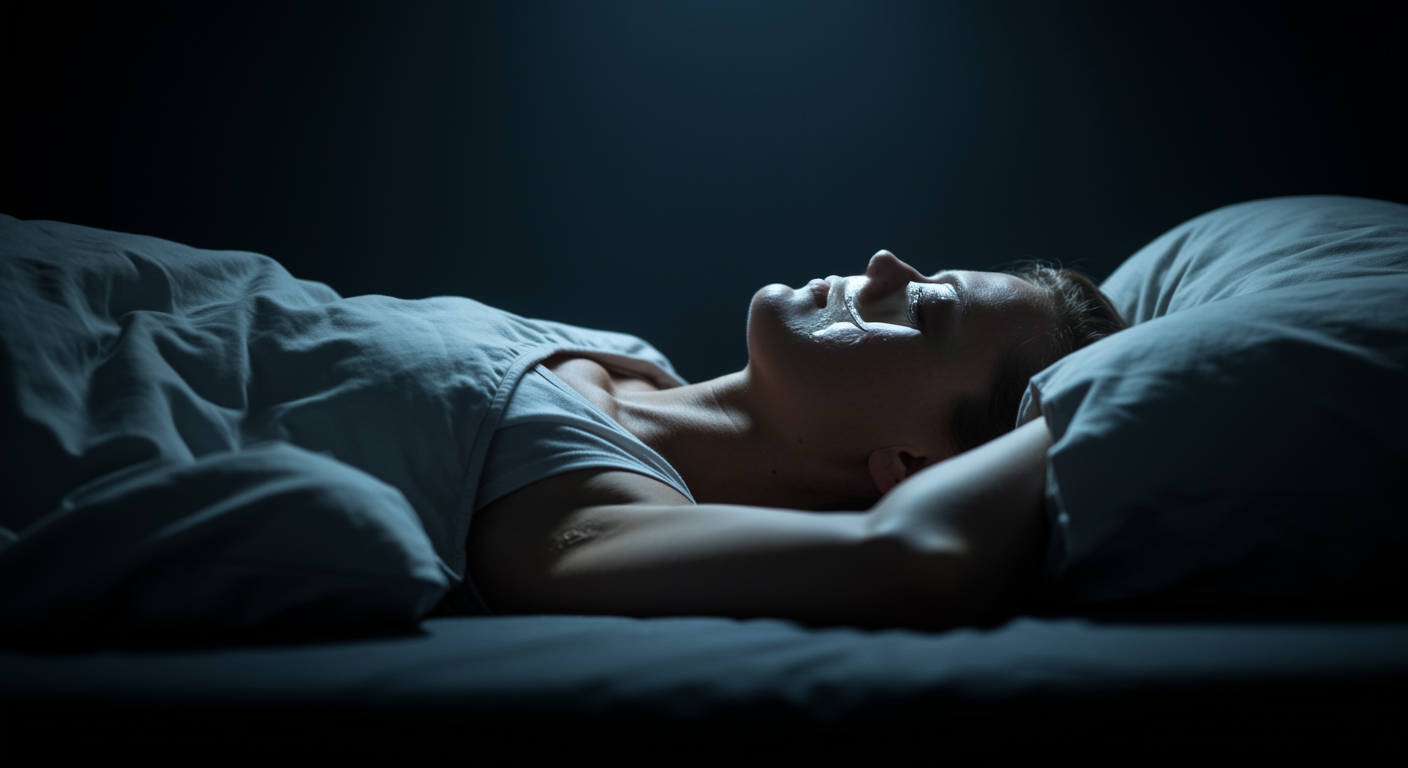
Casein is the main protein in milk, and it digests slowly. Sleep is a long fast, so muscle building normally drifts low overnight. In a trial of 48 older men with an average age of 72, 40 grams of casein before sleep raised the overnight rate of muscle building by about 33 percent compared with a placebo. Twenty grams did no better than placebo, and adding the amino acid leucine did not rescue the smaller dose. Over months, the picture is weaker. In two trials of older men on weight-training programs, protein before bed added no extra muscle or strength over training alone. Lifting and total daily protein mattered more than timing. If you struggle to eat enough protein during the day, about 40 grams of casein 30 minutes before bed is an easy way to close the gap. Swap it for another evening snack, since it adds about 160 calories.
Key finding: 40 grams of casein before sleep raised overnight muscle building by about 33 percent in older men, while 20 grams did no better than a placebo.
Hormone Therapy After Menopause Thickened Skin but Did Not Reduce Wrinkles in a 4-Year Trial
A meta-analysis of 15 studies in 1,589 menopausal women found that hormone therapy raised skin collagen and thickness by a large margin. Thicker skin matters, because thin skin tears, bruises and heals slowly. Wrinkles are a different story. In the KEEPS trial, women started an estrogen pill, an estradiol patch, or a placebo within 3 years of their last period. Their faces were scored for wrinkles every year for 4 years, and the groups never differed. A 485-woman trial found no wrinkle benefit either. One possible reason for the gap is that the collagen biopsies came from the hip, arm and belly, which see little sun, while facial wrinkles are driven mostly by sun. Estrogen cream on the face did not help in its one trial. If you take hormone therapy for hot flashes or bone protection, count firmer skin as a bonus, and use retinol and daily sunscreen for wrinkles.
Key finding: Over 4 years, women on an estrogen pill or patch had the same facial wrinkle scores as women on placebo, even though pooled studies show hormone therapy thickens skin and adds collagen.
Stay curious. Stay skeptical. And stay healthy.
Dr Kumar