Hi everyone,
The link between Tylenol in pregnancy and autism or ADHD has always come from observational studies, which track what mothers took but cannot prove cause. Even in those studies, the link was weak. This week, researchers pooled seven meta-analyses covering more than 3 million people, then kept only the best-quality studies. When they did, the link nearly disappeared. That is really useful for anyone who has worried about it.
I also found a few other studies I thought were interesting and useful for staying healthy. In about 95,000 adults who wore sleep trackers, more REM sleep was linked to lower risk of 83 diseases, and 6 to 8 hours of sleep marked the lowest risk. Another study found that losing muscle as you age was tied to about 42 percent higher dementia risk. A third found that people whose blood showed signs of eating peanuts had about 11 percent lower diabetes risk, mostly because they weighed less. And in a survey of US teens, TikTok was the app most often blamed for lost sleep.
On the podcast, Dr. Anne Marie Fine explains which pollutants build up in our bodies and the changes at home that cut them.
I am a neurosurgeon, and I built an app to exercise your brain. Nine puzzles cover the nine domains of thinking: memory, language, numbers, space, attention, logic, and planning. New puzzles are generated every day, so there is a fresh set waiting for you every morning. They are fun and a little addictive, and they do not feel like work. They feel like a game. I play mine every morning with my coffee. Three games are free to play every day, with no sign-up.
This Week’s Podcast Spotlight
Episode 73: The Silent Toxin Buildup That Ages Your Brain, with Dr. Anne Marie Fine
Dr. Anne Marie Fine is an environmental medicine physician who has spent about 25 years measuring the metals, plastics, and pollutants people carry in their bodies, the things a standard blood panel never checks. Early in our conversation I asked her about a UK Biobank study she had sent me before we recorded. It measured blood proteins in 44,000 people across 11 organs, and the brain and immune system, not the heart, tracked most closely with aging. Brains that scored young behaved as if they carried two copies of APOE2, the protective Alzheimer’s gene, and brains that scored old behaved like APOE4 carriers, whatever their actual genes were. In her words, your blood is telling you more than your genome. Your genes are fixed, but how old your brain is behaving can move, and the last third of the episode is about the practical changes at home that lower what you take in.
What we got into:
- Your indoor air is probably the worst air you breathe. In one study, benzene measured three to four hours after an hour of gas stove use exceeded the EPA’s outdoor limit, even in the room farthest from the kitchen.
- Avoidance comes first. Anything you never take in is something you never have to detox out. Dr. Fine now thinks every home should have an air filter and a water filter, with plastics out of food storage and cleaner makeup.
- Menopause can re-dose you with childhood lead. Anyone born before 1980 carries lead stored in their bones, and as bone is lost after menopause, that lead goes back into the bloodstream.
Want to go further? Dr. Fine teaches a course for the general public called How to Thrive in a Toxic World.
This Week in Health Science
Five studies from this week’s research, and I think you will find a few of them practically useful.
Tylenol in Pregnancy: The Autism and ADHD Link Shrank Toward Zero in the Best Studies of 3 Million People

Acetaminophen, sold as Tylenol, is the standard pain and fever reliever in pregnancy, and whether it raises autism or ADHD risk is a question a lot of expecting parents ask. Researchers in Spain pooled seven meta-analyses covering more than 3 million people. With every study thrown in, prenatal exposure went with about 17 percent higher relative risk of autism and 29 percent higher risk of ADHD. Those are the numbers that make headlines. When they reran it using only the higher-quality reviews and the studies at low risk of bias, the links shrank sharply, and in several models came close to no link at all. A real cause usually holds up in the best studies; this did the opposite, which points to confounding. If you are pregnant and have a fever or pain that needs treating, this review supports acetaminophen as a reasonable first choice, taken when there is a real reason for it.
Key finding: The unfiltered 17 percent (autism) and 29 percent (ADHD) higher risks shrank toward zero once only the higher-quality evidence was used, across 7 meta-analyses and more than 3 million people.
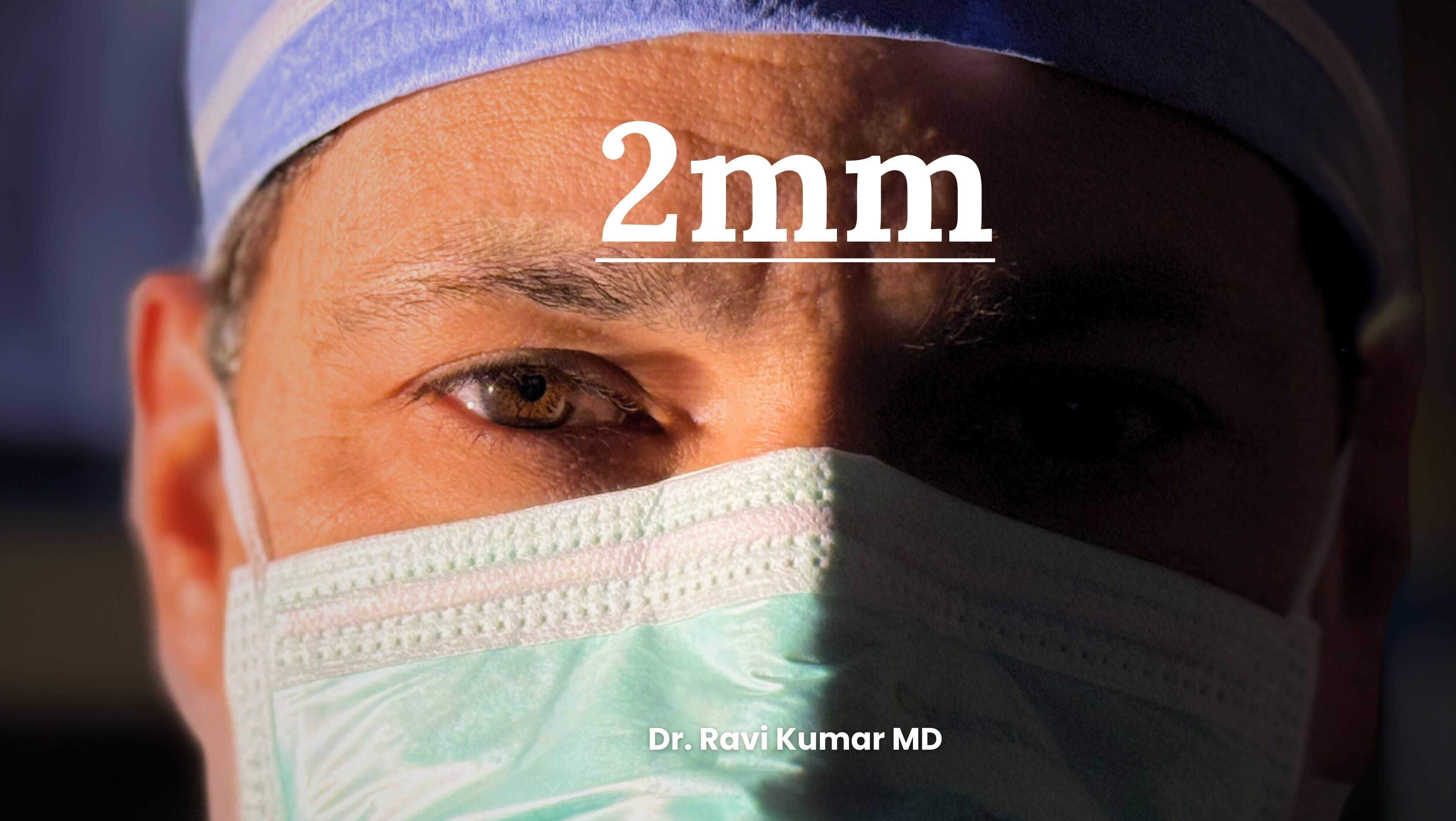
My book, 2mm, is almost here, and the first chapter is free to read right now. It is the story of seven years inside the operating room, where every decision is measured in millimeters and every millimeter matters. If you want to read the first chapter, go to 2mmbook.com.
More REM Sleep Was Linked to Lower Risk of 83 Diseases in 95,559 Adults

Most sleep research relies on how people say they slept. In this UK Biobank study, 95,559 adults wore a wrist tracker for a week to estimate sleep stages, then were followed for nearly nine years against 1,049 diseases in hospital records. More REM sleep was linked to lower risk of 83 conditions, and more deep sleep to lower risk of 7. The big caveat is direction: Parkinson’s, dementia, and heart failure disturb sleep years before diagnosis, so some of this is early disease showing itself. The sturdier finding is sleep length. For 69 of the 86 conditions where length mattered, the lowest risk sat at 6 to 8 hours, and 37 of 41 higher-risk links came from people sleeping under 5 hours. An irregular bedtime carried risk on its own. If your schedule shifts a lot night to night, a steady bedtime and wake time with 6 to 8 hours of actual sleep is the practical move.
Key finding: More REM sleep was linked to lower risk of 83 of 1,049 diseases, and 6 to 8 hours of sleep marked the lowest-risk window for 69 conditions.
Losing Muscle With Age Was Tied to 42 Percent Higher Dementia Risk

Sarcopenia is the age-related loss of muscle mass and strength. This review pooled cohort studies that measured people first and then followed them to see who developed dementia. People with sarcopenia had about 42 percent higher dementia risk, very likely somewhere between 26 and 58 percent. Obesity split by age: before 65 it went with about 9 percent higher risk, and after 65 with about 17 percent lower. That second number is easy to misread. Dementia has a long silent phase when people lose appetite, weight, and muscle before anyone names the disease, so late-life weight loss may be an early sign rather than the cause. Some of that applies to muscle loss too, but muscle is one of the few risk factors here you can actually change. If you are not doing any strength work as you get older, resistance training two to three times a week with enough protein is the direct way to hold on to muscle.
Key finding: Across pooled cohort studies, people with sarcopenia had about a 42 percent higher risk of developing dementia (hazard ratio 1.42).
Peanut Eaters Get Less Diabetes. Here’s Why.

Peanuts carry an unusual kind of saturated fat, the very long-chain type, which behaves differently from the shorter fats in butter or meat. In a six-month trial, 63 young adults ate peanuts or peanut butter every day, and 51 fat measures in their blood shifted. Researchers turned those shifts into a blood fingerprint of peanut eating, then looked for it in a German study that tracked who went on to develop disease. Each step up in the fingerprint went with about 11 percent lower risk of type 2 diabetes, a thin result whose range came close to no effect. Body mass index explained about 89 percent of that link, and heart disease showed no link at all. That makes this mostly a weight story. A small handful of peanuts, about 25 grams, is a reasonable swap for chips or sweets, because peanuts are filling and hard to overeat.
Key finding: People carrying more of the peanut blood-fat fingerprint had about 11 percent lower type 2 diabetes risk, and body mass index explained about 89 percent of that link.
Instagram and TikTok Topped Nearly Every Harm Measured in 472 Teens, With YouTube Several Times Lower

Screen time treats every app the same. This national survey asked 472 US teens aged 13 to 17 what had happened to them online in the past four weeks, and on which of 20 apps. Violent imagery reached 9.1 percent of teens on Instagram versus 1.9 percent on YouTube. Feeling worse about yourself because of other people’s posts ran 16.6 percent on Instagram and 13.4 percent on TikTok, versus 4.1 percent on YouTube. Sleep took the biggest hit: 42.2 percent of teens using TikTok said it was disrupting their sleep, compared with 10.2 percent who named text messaging. This is a one-time snapshot of what teens reported, so it cannot show the apps caused the harm rather than drew in teens already prone to it. If you have a teenager, ask which apps they use rather than how many hours, and keep the phone out of the bedroom overnight.
Key finding: 42.2 percent of teens using TikTok said the app was disrupting their sleep, and violent imagery reached 9.1 percent of Instagram users versus 1.9 percent of YouTube users.
Stay curious. Stay skeptical. And stay healthy.
Dr Kumar