Hi everyone,
I came across a batch of studies this week that share a quiet theme: a lot of what shapes our long-term health comes down to small, ordinary choices we barely think about. The lights we leave on at night, how much we lift, what we keep in the supplement drawer, the hour we spend scrolling. A rigorous trial showed that fish oil reaches the aging brain but does nothing to protect it, bright evenings were tied to more eye disease, and fiber turned out to work for some people and do nothing for others. I also recorded a solo episode on a microscopic layer inside your arteries that most doctors, myself included until recently, learned almost nothing about in medical school. Here is what stood out.
This Week’s Podcast Spotlight
Episode 61: The Silent Layer In Your Arteries That Predicts A Heart Attack Years Before It Happens
This one started as a deep dive I did for myself. There is a thin, gel-like coating called the glycocalyx that lines the inside of every blood vessel in your body, and it may be one of the very first places heart disease begins, years before anything shows up on a test. I went to medical school and barely heard it mentioned, and I suspect most of my colleagues are in the same boat. What I found fascinating is that this delicate layer does three jobs at once, and when it wears down, it fails at all three together, which is the quiet setup for plaque, heart attacks, and strokes. I wanted to break down what actually protects it, and, just as important, what the supplement world is selling that has not been proven to help.
Three things that stood out:
- Your arteries have a hidden shield. The glycocalyx is a fuzzy, negatively charged coating that keeps cholesterol and inflammatory cells from sticking to your vessel walls, yet it never shows up on standard blood work.
- Blood sugar wears it down fast. In one study, raising healthy young men’s blood sugar for just a few hours cut their whole-body glycocalyx roughly in half.
- You cannot buy the fix. Seaweed blends and specialty drugs remain unproven in people, while the real protection is the free, boring stuff: daily movement, stable blood sugar, controlled blood pressure, and not smoking.
This Week in Health Science
Here is what stood out from the research this week. These studies fascinated me, and I think you will find a few of them practically useful.
Muscle Is Quietly Protecting Your Blood Sugar

When we talk about preventing diabetes, the conversation almost always defaults to cardio and calories. This study of more than 143,000 adults, followed for nearly two decades, makes a strong case that lifting weights deserves a seat at that table. People who did at least two hours of strength training a week were meaningfully less likely to develop type 2 diabetes, and those who stayed consistent through midlife did better still. The part I keep coming back to is that the protection held even in people whose weight did not change. Muscle is not just for looks or strength; it is active tissue that pulls sugar out of your blood and uses it. This is observational research, so it shows a strong link rather than proof, but the size and length of it give me real confidence.
Key finding: Two hours of strength training a week was linked to a 27% lower risk of type 2 diabetes, rising to 42% for those who stayed consistent through midlife, and 62% when lifting was paired with aerobic exercise and less television time.
Fish Oil Reaches Your Brain but Cannot Protect It

Fish oil is one of the most popular supplements in the world, and a lot of people take it hoping to guard their aging brain. This trial is the most honest test of that hope I have seen. Researchers gave 365 adults aged 55 to 80, all at higher risk for dementia and nearly half carrying the high-risk APOE4 gene, either 2 grams of DHA a day or a placebo for two years. The clever part is that they first checked whether the omega-3 even reached the brain, measuring it in the fluid that bathes the brain and spinal cord. It did, rising about 17 percent. Then came the letdown: despite clearly getting in, the DHA did nothing for memory or thinking, did not slow shrinkage of the brain’s memory center, and helped no one, not even the APOE4 carriers many experts expected to benefit most. I find this clarifying rather than depressing. It kills the comforting idea that if we could just get enough omega-3 into the brain, the brain would shield itself. We got it in. The brain did not. A single nutrient, taken late and taken alone, is probably the wrong way to think about protecting your mind. One caveat worth naming: this trial tested DHA on its own, not EPA, the other major omega-3 in fish oil, so the question of whether EPA has protective effects for the aging brain is still open.
Key finding: Two grams of DHA a day raised omega-3 in the brain’s fluid by about 17%, yet over two years it produced no improvement in memory, no slowing of brain shrinkage, and no benefit even in high-risk APOE4 carriers.
Why Fiber Works for Some People and Not Others
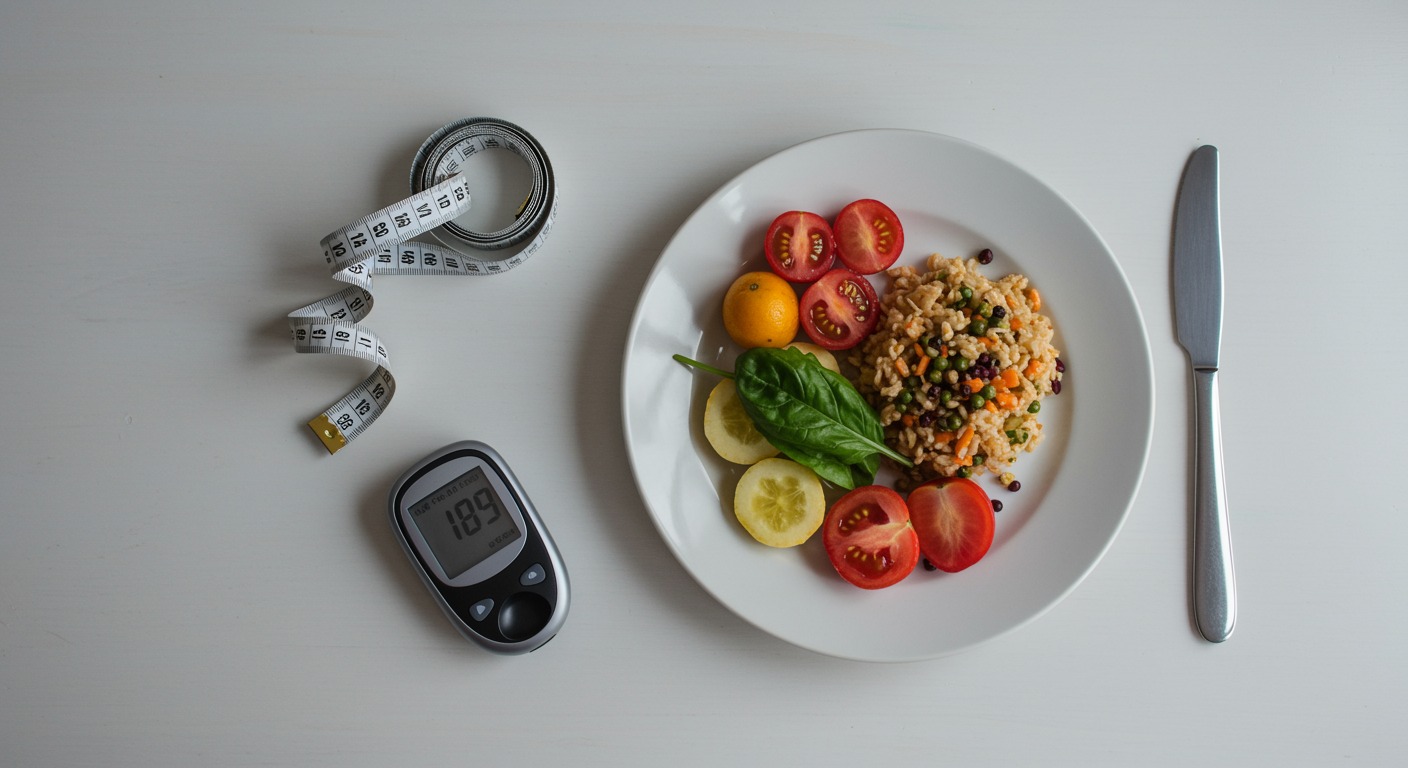
This one is a great lesson in why blanket advice can be misleading. Researchers gave a fiber supplement to adults with prediabetes, and across the whole group it did nothing for blood sugar. If the study had stopped there, the answer would simply be no. But when they looked closer, fiber clearly helped one subset of people and did nothing for another, and the dividing line was the gut microbiome. We cannot digest fiber ourselves; our gut bacteria ferment it into compounds that help the body handle sugar. When the right bacteria were present, fiber worked. When they were missing, the same fiber just passed through. The team even built a tool that reads a person’s baseline gut bacteria and predicts in advance whether fiber will help. That kind of personalized nutrition is not standard care yet, so I would treat commercial gut-test diet plans with healthy skepticism. Fiber still earns its place on your plate for plenty of other reasons.
Key finding: A fiber supplement showed no average benefit on blood sugar across 802 adults with prediabetes, yet it clearly improved control in the subgroups whose gut bacteria shifted in helpful ways.
The Light in Your Living Room May Be Aging Your Eyes

Most of us spend our evenings bathed in bright overhead lights and screens without a second thought. This study makes me want to reach for the dimmer. Instead of guessing at people’s light exposure, researchers had more than 82,000 people wear a wrist device with a real light sensor, then followed them for nearly eight years. The people with the brightest evenings had a notably higher risk of the three big aging eye diseases, and the more light they were exposed to, the higher the risk climbed. That dose-response pattern is the kind of result that tends to hold up. It is observational, so it cannot prove that light causes the damage, but the biology is plausible: bright light late at night strains the eye and confuses the body clock, and both feed the slow inflammation behind aging. Dimming your evenings is cheap, safe, and easy, so I see little reason not to act on it now.
Key finding: People in the brightest 10% of evening light exposure had a 31% higher risk of macular degeneration, an 18% higher risk of cataract, and a 47% higher risk of glaucoma.
Less Scrolling, Less Loneliness

We have known for years that heavy social media use travels alongside loneliness in young people, but a correlation never told us which way the arrow points. What makes this study worth your attention is that it is an actual experiment. Researchers took 260 young people already dealing with anxiety or depression and randomly asked half of them to cap social media at one hour a day for three weeks. That group felt measurably less lonely than the group that kept scrolling. Two details stood out to me. First, the benefit was just as strong for boys as for girls, and just as strong whether or not people constantly compared themselves to others online, which points to the amount of use itself as the culprit. Second, nobody had to quit cold turkey; one hour a day is a target a lot of teens could actually hit. The effect was modest and three weeks is short, so I see this as one useful tool within a fuller plan, not a cure.
Key finding: Young people who cut social media to one hour a day felt significantly less lonely after just three weeks, and the benefit reached boys and girls alike regardless of how much they compared themselves to others.
My book, 2mm, is almost here. It is the story of seven years inside the operating room, where every decision is measured in millimeters and every millimeter matters. If you want to be the first to know when it is available, leave your email at 2mmbook.com.
Stay curious. Stay skeptical. And stay healthy.
Dr Kumar