Hi everyone,
This week I came across a couple of studies that felt like real landmarks. A disease we have called incurable for decades got cured in a real trial, and a psychedelic that clears your body in about five minutes lifted depression for months after a single dose. I also pulled in a few findings you can actually use starting today, about how you sit, what you drink, and the eating pattern that protected hearts over 20 years. And the podcast this week is a personal one: I sat down and told the story of my own burnout, and how I found my way back. Here is what stood out.
This Week’s Podcast Spotlight
Episode 62: How Burnout Almost Ended My Neurosurgery Career, And What Saved It
This episode is different from the usual deep dive. There is no new micronutrient or piece of technology in it. Instead I step out from behind the microscope and tell my own story. It was recorded on stage as part of psychologist Dr Trey Tippens’ Trey Talks series, and it is an honest conversation about the burnout I hit after finishing my neurosurgical residency, and the long, strange road I took to come out the other side still in love with my work. It covers seven years of 80 to 100 hour weeks, a collapse that showed up in my body before it showed up in my head, selling everything we owned, and operating barefoot in a hundred-year-old stone mission hospital at the top of the Western Ghats in India. I put it out because burnout is something high performers almost never talk about openly, and I think there is something in here for a lot of you, whatever field you are in.
Three things that stood out:
- Burnout is not just being tired. Clinically it is three things at once: emotional exhaustion, depersonalization (seeing people as objects instead of individuals), and losing the sense that your work matters.
- The crash often comes after you stop, not during the grind. I ran on borrowed adrenaline for seven years, then got physically sick with headaches and stomach pain the moment I reached what looked like paradise in Hawaii.
- A change of scenery will not fix it, but a change of structure can. Operating barefoot in an Indian mission hospital rebuilt my sense of purpose; coming home, I rebuilt my schedule so the job no longer owns me.
This Week in Health Science
Here is what stood out from the research this week. These studies fascinated me, and I think you will find a few of them practically useful.
A Disease We Called Incurable Just Got Cured

I do not use the word cure lightly, so this one stopped me. For decades we have told people with chronic hepatitis B that it is a lifelong condition: the daily pills hold the virus down, but they almost never clear it. In two large, near-identical phase 3 trials, a drug called bepirovirsen produced a functional cure in about 1 in 5 patients, while no one on placebo was cured. A functional cure does not mean every trace of the virus is gone, but it means the standard markers of active disease disappear and stay gone, which can lower the long-term risk of liver damage and liver cancer. The honest caveat is that four out of five patients did not reach that mark, and the drug is still investigational, not yet approved. But for a disease long considered a life sentence, this is a real turning point.
Key finding: In two phase 3 trials, bepirovirsen produced a functional cure in roughly 20% of people with chronic hepatitis B, rising to 25 to 28% in those who started with lower virus levels, compared with 0% on placebo.
A 5-Minute Psychedelic That Eased Depression for Months

Psychedelic therapy for depression is promising, but one big obstacle has always been time. A psilocybin session can tie up a patient and a couple of trained therapists for the better part of a day. This trial tested DMT, a psychedelic with a half-life of about five minutes, so the intense part of the experience is over fast. Thirty-four adults with moderate-to-severe depression got either a single DMT infusion or a placebo, both paired with supportive therapy. Two weeks later, the DMT group had dropped about 7 more points on a standard depression scale than placebo, and the benefit held for up to three months. It is a small, early study, and the psychological support during dosing is almost certainly part of why it worked, so this is not a drug to try on your own. But the speed is what excites me, because that is the kind of thing that could let a treatment like this actually reach real clinics.
Key finding: A single dose of DMT lowered depression scores by about 7.35 points more than placebo two weeks after dosing, with the benefit lasting up to three months and 35% of patients responding versus 12% on placebo.
The Eating Pattern That Won a 20-Year Heart Race

For years, the default advice for a worried heart was simply to cut fat. This study suggests we can do better. Researchers followed more than 12,000 US adults aged 55 to 80, all of whom already had diabetes or several major heart risk factors, and compared three eating patterns over 20 years. The low-fat diet came in last. About 36% of people on it developed cardiovascular disease, compared with 31% for those meeting the American Heart Association’s goals and 28% for those on a Mediterranean pattern. What I like about this is that it reflects the patients I actually see, people who already have risk factors stacked against them, and it says it is not too late to shift the odds. A Mediterranean plate built around olive oil, nuts, fish, beans, vegetables, and whole grains is not an exotic prescription. It is food you can enjoy for decades.
Key finding: Over 20 years, a Mediterranean diet was tied to a roughly 21% lower relative risk of heart disease than a low-fat diet in high-risk older adults, with the AHA’s goals landing in between.
It Is Not Just How Much You Sit, but How You Sit

Most advice about sitting focuses on the total: how many hours you spend at your desk or on the couch. This study of 91,292 adults, tracked with wrist activity monitors for more than a decade, asked a smarter question. It looked at how you gather up that sitting time, in long unbroken blocks or in stretches you frequently interrupt. The pattern mattered a great deal. Each extra hour of prolonged, unbroken sitting was tied to a 9% higher risk of dying from cancer, while each extra hour of frequently interrupted sitting was tied to an 18% lower risk. Trading just one hour of long sitting for light activity like walking around the house was linked to 12% lower cancer death. The practical message hiding inside is a gentle one: you do not have to eliminate sitting, which is nearly impossible for a lot of us. You have to break it up.
Key finding: Each additional hour of prolonged, unbroken sitting was linked to a 9% higher risk of cancer death, while swapping just one hour of it for light activity was tied to 12% lower cancer mortality, and 5 minutes of vigorous activity to 22% lower risk.
Your Diet Soda Is Not the Free Pass We Thought

I have spent years telling patients that a diet soda beats a sugary one, and on the surface that is still true. But this review and new meta-analysis, led by cardiologist Dariush Mozaffarian, reframes the choice. Pulling together randomized trials, large population studies, and gut microbiome experiments, the authors found that sweeteners like aspartame, sucralose, and saccharin are not metabolically inert. Compared with water or placebo, they raised fasting insulin and HbA1c, a marker of long-term blood sugar control, and appeared to shift gut bacteria in ways tied to higher heart and metabolic risk. In one striking experiment, gut bacteria from people who used sweeteners were transplanted into mice, and the mice then handled blood sugar worse. Large amounts of added sugar are still worse, so this is not a reason to swing back to sugar. The smarter goal is to lean on unsweetened options and slowly retrain your palate away from intense sweetness.
Key finding: In randomized trials comparing them against water or placebo, non-nutritive sweeteners raised fasting insulin and HbA1c and altered gut bacteria in ways linked to higher cardiometabolic risk, undercutting the idea that they are metabolically neutral.
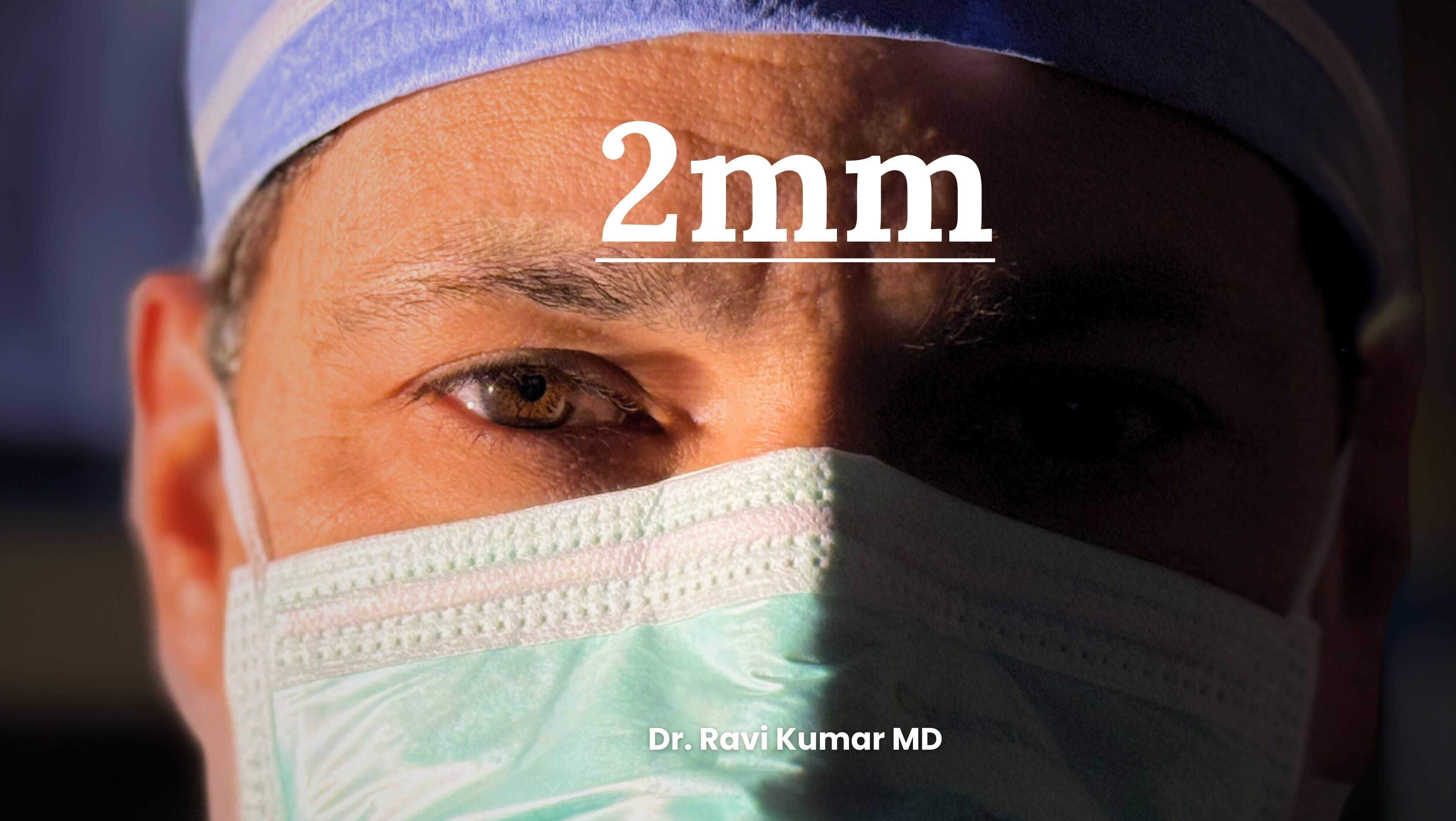
My book, 2mm, is almost here. It is the story of seven years inside the operating room, where every decision is measured in millimeters and every millimeter matters. If you want to be the first to know when it is available, leave your email at 2mmbook.com.
Stay curious. Stay skeptical. And stay healthy.
Dr Kumar