Hi everyone,
In 57 volunteers, deliberately paying attention to a freshly inflamed patch of skin left a bump about 30 percent smaller than distraction did, and about 90 percent of people showed the same pattern. That is a fascinating example of the mind changing inflammation in the body. And if you can do that in your skin, the obvious question is whether you can do it with inflammation somewhere deeper, which is something the meditation literature has suggested for years. A few other studies I thought were interesting and useful for staying healthy: heavy artificial sweetener use tracked with more diabetes across 721,003 adults, insomnia raised death risk only when a lab measured the sleep as short, three minutes of sprints moved more blood proteins than 90 minutes of cycling, and estrogen-only hormone therapy lined up with less Alzheimer pathology at autopsy. Plus a podcast on catching heart disease years before it happens.
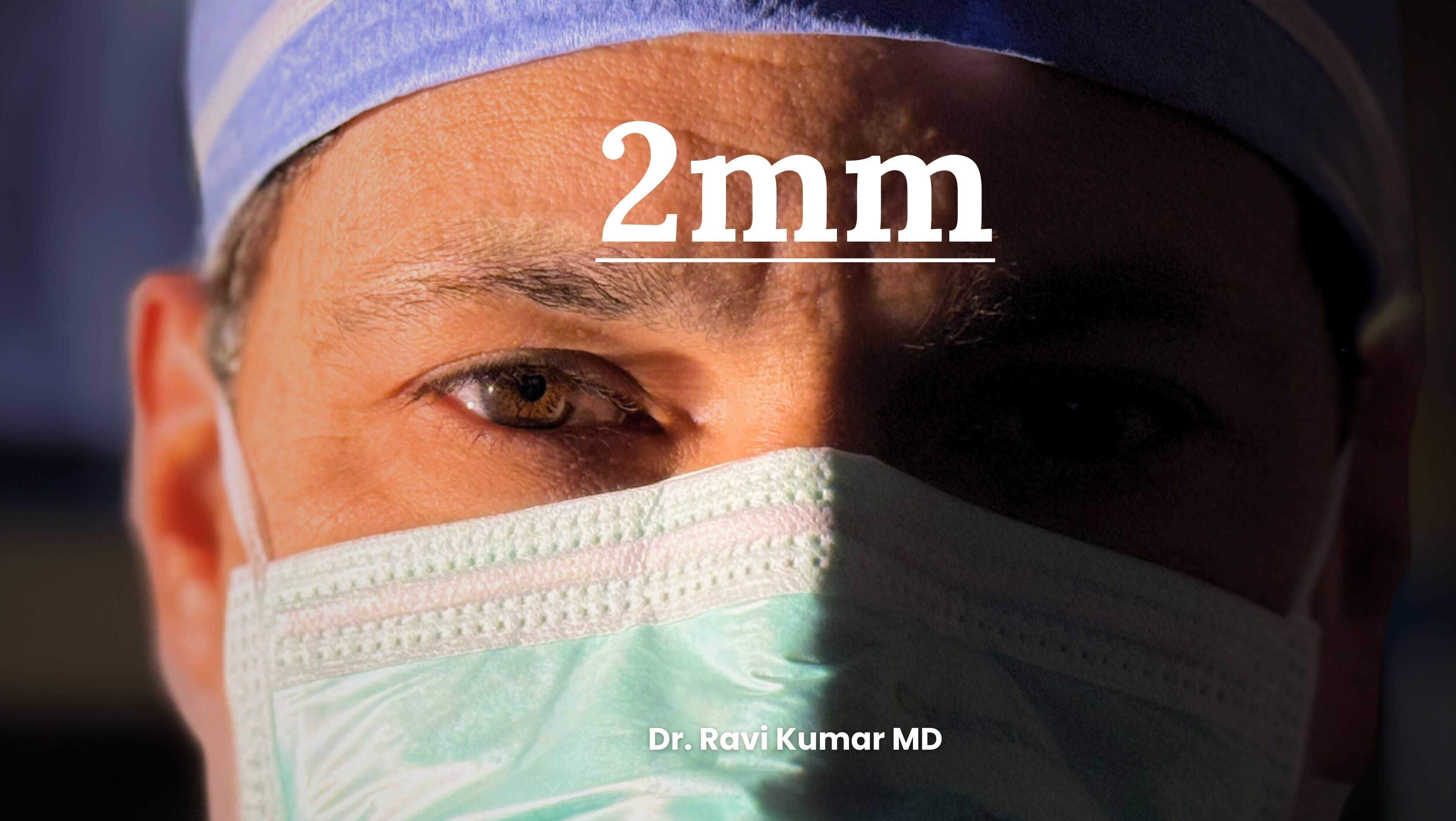
My book, 2mm, is almost here. It is the story of seven years inside the operating room, where every decision is measured in millimeters and every millimeter matters. If you want to be the first to know when it is available, leave your email at 2mmbook.com.
This Week’s Podcast Spotlight
Episode 68: Can You Prevent a Heart Attack Before it Happens? | Dr. John Osborne, MD
A cardiac CT with AI plaque analysis is a scan of your heart’s arteries that takes about a second to acquire, and then gets run through software that measures the plaque inside them in cubic millimeters, separates the hard inert kind from the soft lipid rich kind that actually ruptures, and can be repeated later to show whether it grew or shrank. Dr. John Osborne has spent 30 years building a practice around finding that disease before anyone has a symptom. Put 100 people with no symptoms through the scan and about 1 percent come back completely clean, while roughly a third are already in the most severe stage of plaque buildup, most of them with normal cholesterol and a normal stress test. Partway into the conversation I pushed on the radiation question, since a CT scanner is the highest dose machine most hospitals own, and his answer was that on the equipment they use the dose runs about 20 percent of a mammogram, for a disease that kills roughly ten times more women than the cancer mammograms look for. The part that makes the whole thing worth doing is that plaque volume moves. He also walked me through what a plan to reverse it actually looks like.
Three points from Dr. Osborne:
- A zero calcium score is not a clean bill of health. Depending on the population studied, 10 to 50 percent of people who score zero still carry significant soft, lipid rich plaque that a calcium scan cannot see at all.
- Plaque volume is a number you can move. Untreated it grows about 10 percent a year. With a plan built around lipids, blood pressure, and tobacco, he commonly sees 10 to 20 percent regression within a couple of years.
- Cholesterol does not predict how much plaque you have. Across hundreds of thousands of AI exams there was no correlation with LDL, ApoB, or Lp(a), including two patients with an identical LDL of 108 and wildly different plaque volumes.
This Week in Health Science
Five studies from this week’s research, and I think you will find a few of them practically useful.
Focusing on an Inflamed Patch of Skin Made the Swelling 30 Percent Smaller

This is one of the cleaner mind to body experiments I have read. Researchers gave 57 healthy volunteers a standard histamine skin prick on the forearm, the same test used in allergy clinics, which raises a small bump within minutes. Then, for the next 20 minutes, each person either directed attention inward to the itching and burning at the site or outward to a distraction on a screen. Everyone did both conditions, so each person served as their own control under an identical immune challenge. The bump was about 30 percent smaller when they paid attention to it, and about 90 percent of participants reacted more strongly when distracted. Numbing the skin with lidocaine shrank the effect but did not erase it, and heart rate variability rose during inward attention, which points at the vagus nerve carrying part of the signal. Two things keep this in perspective. It is a 20 minute skin reaction in healthy young adults, not asthma or arthritis or an infection. And smaller is not automatically better, since inflammation is a defense and the researchers say plainly that blunting it during an infection could work against you. What it does establish is that an acute immune response most of us treat as automatic shifts with nothing more than where you aim your attention.
Key finding: In three pre-registered experiments with 57 volunteers, the wheal measured 3.5 mm under inward attention versus 5.0 mm under distraction at the 20 minute peak, with less than a 1 in a million chance that gap is coincidence, and roughly 90 percent of participants showed more inflammation when distracted.
Insomnia Raised Death Risk Only When a Sleep Lab Measured the Sleep as Short

Researchers followed 767 adults for a median of 8 years and split them four ways: insomnia symptoms or not, and measured sleep under 6 hours or not. Only one of those four groups carried a higher risk of dying. People with insomnia symptoms whose overnight lab study recorded under 6 hours of sleep had about 2.6 times the death risk. Insomnia with normal measured sleep did not raise risk. Short sleep without insomnia did not either. Then comes the part that should change how you read every sleep headline you see: when the researchers used what people said about their own sleep instead of what the sensors recorded, the link to death vanished completely. People are poor judges of their own sleep. Someone who lies awake feeling wrecked may be logging seven hours, and someone who swears they slept fine may be getting five, and the body appears to respond to the actual number. Almost every large sleep study in existence runs on a questionnaire, which is worth remembering the next time one makes the news. This is one observational cohort of modest size with a wide confidence range, so the exact risk is unsettled, but the pattern is that insomnia is not one condition, and the version that comes with truly short sleep looks like the more serious one.
Key finding: In 767 adults followed a median of 8 years, insomnia plus under 6 hours of lab-measured sleep carried a 2.57 times higher risk of death (95% CI 1.12 to 5.89), while insomnia plus self-reported short sleep showed no association with mortality at all.
Heavy Artificial Sweetener Use Tracked With 31 Percent More Diabetes in 721,003 Adults

The whole appeal of a sweetener with no calories is that it should not be able to touch your metabolism. This pooled analysis of six long-term cohorts covering 721,003 adults across the US, Europe, and Japan does not support that. Over an average of 10.1 years, the heaviest users of aspartame, sucralose, saccharin, and acesulfame potassium developed type 2 diabetes about 31 percent more often than the lightest users. The proposed explanations are interesting: shifts in gut bacteria, and the possibility that repeated intense sweetness with no calories attached breaks the learned link between a sweet taste and incoming energy, which then shifts appetite and later eating. This is observational work, intake was self-reported, and people who reach for sweeteners are often already worried about their weight, which is exactly the group headed toward diabetes anyway. The authors graded the certainty as low and asked readers to be cautious, which is the right posture. Still, the useful version is narrower than the headline. A diet soda is not a health drink, and if you are using one as a bridge away from sugar, treat it as a step rather than a destination. Reducing overall sweetness beats changing which molecule delivers it.
Key finding: Across 721,003 adults and 38,445 new diabetes cases over an average 10.1 years, the highest artificial sweetener intake carried a 31 percent higher risk of type 2 diabetes (pooled hazard ratio 1.31, 95% CI 1.16 to 1.49).
Three Minutes of Sprints Changed More Blood Proteins Than 90 Minutes of Cycling

When you exercise, your muscles, fat, and liver release proteins into the bloodstream that work like text messages between organs, telling the rest of the body to burn fuel differently, grow new blood vessels, or repair tissue. Rockefeller University researchers compared six 30-second all-out sprints against 90 minutes of steady moderate cycling and found the two left completely different signatures. The sprints set off an immediate wave of proteins tied to blood vessel growth, tissue remodeling, and hormone signaling. The 90 minute ride moved fewer than one quarter of one percent of proteins. Part of the reason the response is so fast is a shortcut: some of these proteins already sit on the surface of cells like handles on a door, and hard effort snaps them off straight into the blood rather than waiting for new ones to be built. When human fat cells were bathed in blood collected after sprinting, their gene activity changed extensively; fat cells given blood from the moderate ride barely responded. This measured molecular signals, not heart attacks or lifespan, so nobody has shown sprinting prevents disease. It also is not an argument against long easy sessions, which build endurance and joint durability that three minutes cannot. But if time is what keeps you from exercising, a short hard session is not a consolation prize.
Key finding: Six 30-second sprints changed nearly a quarter of measured blood proteins, while 90 minutes of continuous moderate cycling changed under 0.25 percent, and the sprint response was still present after eight weeks of training rather than fading as the body adapted.
Estrogen-Only Hormone Therapy Was Tied to 35 Percent Less Alzheimer Pathology at Autopsy

Whether hormone therapy after menopause helps the aging brain, hurts it, or does nothing has been argued for two decades, largely because studies pooled different formulations together. Researchers at Stanford and Johns Hopkins looked at one form on its own, estrogen without a progestin, which is what women who have had a hysterectomy typically receive. Women who used it had about 35 percent lower odds of significant Alzheimer pathology in their brain tissue at autopsy and about 39 percent lower odds of ever being diagnosed with dementia. Amyloid, the protein that clumps into plaques years before symptoms show up, was lower in both blood and spinal fluid. No single number here is large, and the authors call the associations small but significant. What gives the result weight is that four independent kinds of evidence line up: tissue under a microscope, a blood test, a spinal fluid test, and the diagnosis in the chart. Bias usually bends one of those at a time, not all four. This is retrospective and observational, hormone use was self-reported with no record of dose or duration, and women who took hormone therapy and then enrolled in an Alzheimer research cohort are probably healthier and better insured to begin with. So this is a reason to study hormone therapy seriously, not a reason to start it for your brain.
Key finding: Among 258 estrogen-only hormone therapy users and 2,701 non-users with brain autopsies, users had 35 percent lower odds of increased Alzheimer pathology (odds ratio 0.65, 95% CI 0.48 to 0.88, p = 0.005) and 39 percent lower odds of a clinical dementia diagnosis.
Stay curious. Stay skeptical. And stay healthy.
Dr Kumar