Hi everyone,
I came across a batch of really interesting studies this week, and a theme kept showing up: the smallest, cheapest moves often do the heavy lifting. A nightly supplement that millions of us treat like candy got tied to heart trouble, while four minutes of exercise and ten minutes of brain training did more than you would expect. I also sat down for a long, interesting conversation with Dr. Todd Born about ADHD, and it showed me that medication should not be the first thing we reach for in kids. Here is what stood out.
This Week’s Podcast Spotlight
Episode 59: Reversing ADHD Without Stimulants with Dr. Todd Born
I sat down with Dr. Todd Born, a naturopathic physician who has spent sixteen years treating ADHD in children and adults. He takes an alternative approach that bypasses stimulant medications as the first-line option for children. Importantly, he is not anti-medication. He is simply following the American Academy of Pediatrics’ own guidance, which says behavioral support, nutrition, sleep, and environment should come before a prescription, especially in young kids. His whole approach is built around a question I think more of us should ask: what else can we actually do first?
We dug into the evolutionary mismatch at the center of all this, the idea that we are asking highly active, neuroplastic young brains to sit and absorb lectures for hours, and then labeling the struggle a disorder. We also got into the more controversial corners, including the honest, mixed evidence on homeopathy and the very real power of placebo. It was one of the more thought-provoking conversations I have had on the show.
Three things that stood out:
- Food dyes are not harmless. In blinded trials, petroleum-based dyes like Red 40 triggered inattention and aggression even in children who did not have an ADHD diagnosis, not just those who did.
- A normal blood test can hide a real problem. A standard CBC can look perfectly normal while a child is still iron deficient, so it is worth ordering a full iron panel rather than relying on the CBC alone. Dr. Born also checks other cofactors that matter for a developing brain, including zinc, omega-3s, magnesium, and vitamin D.
- Start with the foundation, not the prescription. Dr. Born works from diet and nutrient repletion upward and saves medication for last, and many kids improve substantially before they ever get there.
This Week in Health Science
Here is what stood out from the research this week. These studies fascinated me, and I think you will find a few of them practically useful.
The Nightly Melatonin Habit That Got Tied to Heart Failure

This study actually really surprised me, because I have always thought of melatonin as fairly low risk. Researchers tracked 130,828 adults with insomnia and found that those who took melatonin for more than a year had a sharply higher risk of heart failure over the next five years. We treat melatonin as harmless because the body already makes it, but the doses in those pills are often far higher than anything your brain releases on its own, and we have surprisingly little long-term safety data. To be clear, this is an observational study, so it cannot prove melatonin is the cause. People who reach for it nightly may simply be less healthy to begin with. Still, an effect this large deserves a serious second look, and a conversation with your doctor if you have been taking it for years.
Key finding: Long-term melatonin users had about a 90% higher risk of heart failure, were nearly 3.5 times as likely to be hospitalized for it, and were almost twice as likely to die during the five-year window.
Reversing Prediabetes Protects Your Heart for Decades

If you or someone you love has ever been told they are prediabetic or have metabolic disease, this is an important piece of research. Researchers pooled decades of follow-up from two landmark prevention trials, one in the US and one in China, and asked a simple question: if you push your blood sugar back into the normal range, does your heart actually benefit? The answer was a clear yes, and the protection lasted for decades. The detail I keep coming back to is that the heart benefit tracked with actually reaching normal blood sugar, not just with trying hard through diet and exercise. That reframes the whole goal. The target is the number, and the lifestyle work is how you get there. Prediabetes is a turning point, not a dead end.
Key finding: People who reversed prediabetes back to normal blood sugar had a 58% lower risk of cardiovascular death or heart failure hospitalization and a 42% lower risk of major heart events like heart attack and stroke.
Your Brain Can Get Healthier at Any Age, Even in Your 90s

We tend to assume the brain just wears down with age, so this three-year study of nearly 4,000 adults caught my attention. Participants did 5 to 15 minutes a day of strategy-based brain training, healthy habits, and coaching, and their brain health scores rose and stayed up, no matter how old they were or where they started. The oldest participants, some in their 90s, improved right alongside the youngest. As a neurosurgeon I have seen how adaptable the brain can be, and this puts a hopeful number on that idea. One honest caveat: there was no separate control group, so I read this as a strong signal rather than final proof. The lesson still holds. Small, steady daily effort on your thinking, your relationships, and your mood appears to pay off over years.
Key finding: Just 5 to 15 minutes a day of brain training led to lasting improvements across age, gender, and education level, and the people who engaged the most gained the most.
Four Minutes a Day Made Older Adults Steadier on Their Feet

I love this study because it is so realistic. We have always known strength training helps older adults stay mobile, but the official guidelines ask for so much time that most people quietly give up. So researchers flipped the question: what if the workout were short enough that people would actually do it every day? They tested a 4-minute home routine of four simple leg and hip moves, no gym and no equipment, in adults 65 and older who already had trouble walking. In 12 weeks the exercise group got noticeably faster out of a chair and steadier on one leg. Just as important, people stuck with it on 81 percent of days, far better than the usual rate for home programs. As someone who sees the damage falls cause every year, the idea that less can be more, because people actually do it, is one I find very encouraging.
Key finding: A 4-minute daily workout left older adults 2.3 seconds faster on a sit-to-stand test and able to balance on one leg 3.6 seconds longer than a control group.
A Cheap, Familiar Pill May Cut Long COVID Risk in Half

Metformin is an old, inexpensive diabetes drug we understand well, which is exactly why this NIH-funded trial is so interesting. In nearly 3,000 adults treated at home for mild-to-moderate COVID-19, a 6-week course of metformin started within a week of symptoms roughly halved the rate of clinician-diagnosed long COVID at six months. It is important to note that more than 83 percent of participants already had immunity from prior vaccination or infection, which matches current immunity rates in the general population. The clearest benefit was for a formal long COVID diagnosis, and the effect on every minor lingering symptom was softer. This is one strong trial, not the final word, but the idea that a familiar, low-cost pill might prevent so much suffering is worth taking seriously.
Key finding: Long COVID was diagnosed in 0.56% of people who took metformin early, compared with 1.17% on placebo, with researchers reporting a 96% probability of real benefit and no safety concerns.
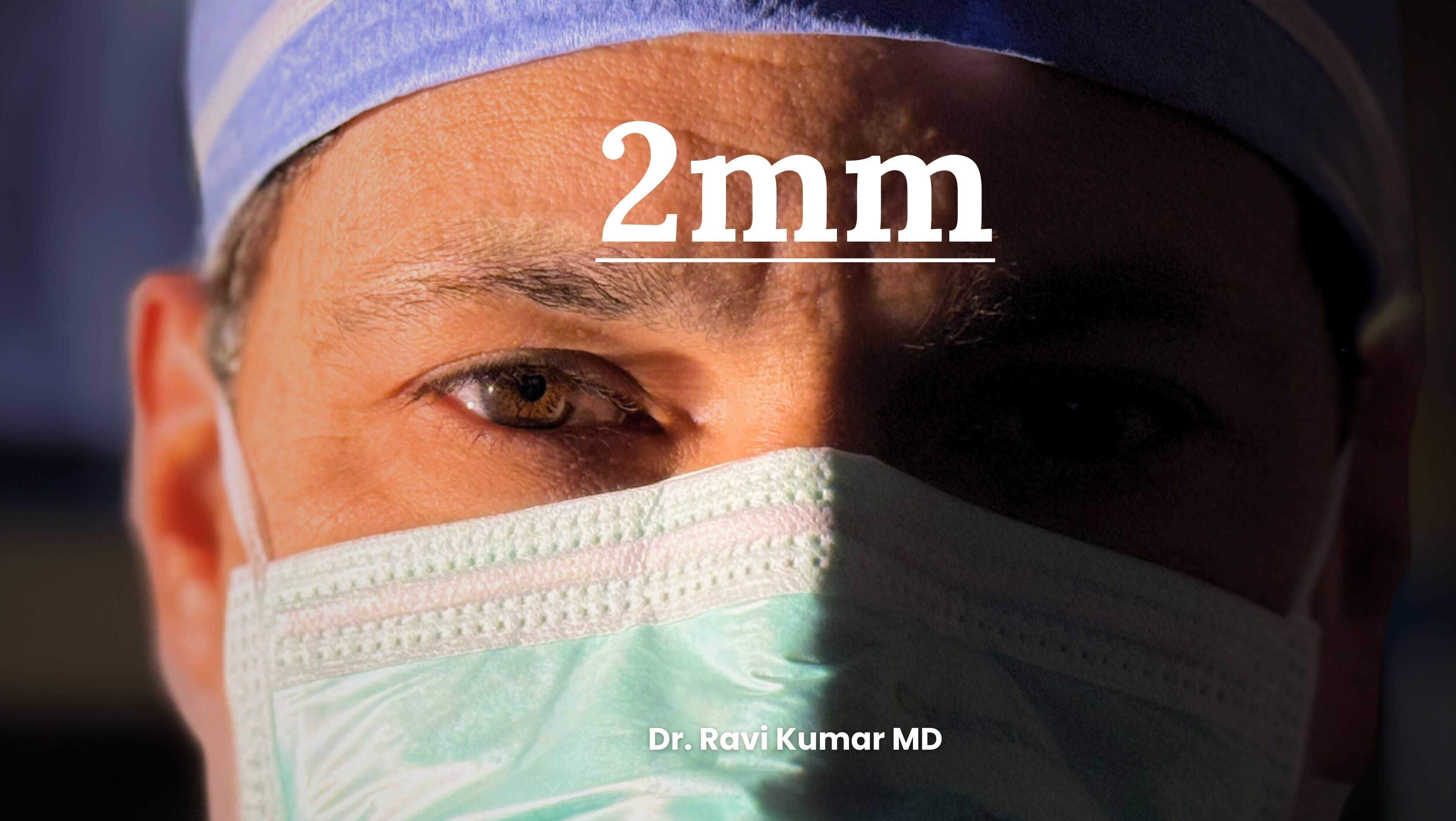
My book, 2mm, is almost here. It is the story of seven years inside the operating room, where every decision is measured in millimeters and every millimeter matters. If you want to be the first to know when it is available, leave your email at 2mmbook.com.
Stay curious. Stay skeptical. And stay healthy.
Dr Kumar