Hi everyone,
The studies that grabbed me this week all circle the same theme: the small, daily choices we barely think about quietly shape our long-term health, sometimes for better, sometimes for worse. A 2-year study suggests the olive oil you pour at home may either protect your brain or accelerate cognitive decline, depending on which kind you buy. A new review of GLP-1 drugs found that a surprising share of the weight people lose is muscle, not fat. A meta-analysis of 4 million adults showed just how powerfully your fitness level shapes your dementia and depression risk. Plus, a fascinating look at how many extra daily steps it actually takes to cancel out the damage of sitting all day, and a large study showing that treating gout properly can cut heart attack and stroke risk by nearly a quarter. And on the podcast, I went deep on magnesium, the mineral that nearly half of Americans are running short on without realizing it.
This Week’s Podcast Spotlight
Episode 42: Magnesium Explained: The Overlooked Nutrient Behind Energy, Sleep, and Stress Control
I wanted to do this episode because magnesium is one of those nutrients that quietly underpins almost everything your body does, and yet roughly 48 percent of Americans consume less than the estimated average requirement. Among women 51 to 70, that number climbs to 64 percent. What really pulled me in is how widespread the deficiency is, and how much modern life works against us: industrial agriculture has cut the magnesium content of fruits and vegetables by 20 to 30 percent over the last 60 years, refining grains strips out 80 to 95 percent of it, and chronic stress causes your kidneys to dump even more.
Three things that stood out from this episode:
- Standard blood tests are not reliable for diagnosing a deficiency, because less than 1 percent of your total body magnesium is actually in your bloodstream. You can have normal labs and still be depleted at the cellular level.
- Magnesium acts as a doorstop on the NMDA receptor in your brain and amplifies GABA signaling, which is why so many people feel calmer, sleep better, and have less anxiety once they get their levels up.
- The form really matters. Magnesium oxide, the kind in most cheap multivitamins, is only about 4 percent absorbed. Glycinate is my favorite for sleep and anxiety, citrate works well for general use, L threonate is the one that crosses the blood-brain barrier, taurate supports the heart, and malate helps with energy and muscle issues.
This Week in Health Science
Here is what stood out from the research this week. These studies fascinated me, and I think you will find them practically useful.
Being Physically Fit Lowers Your Risk of Depression and Dementia

This meta-analysis pulled together 27 studies covering more than 4 million adults across nine countries, and the numbers are striking. People with high cardiorespiratory fitness had a 36 percent lower risk of depression, a 39 percent lower risk of all-cause dementia, and a 29 percent lower risk of psychotic disorders compared to those with low fitness. What I find most useful is the dose-response piece: every 1-MET improvement in fitness, roughly the difference between walking at a normal pace and walking briskly, was linked to a 19 percent lower dementia risk. You do not need to become an athlete. Small, consistent gains genuinely move the needle.
Key finding: High cardiorespiratory fitness was linked to a 36 percent lower risk of depression and a 39 percent lower risk of dementia, across more than 4 million adults followed for up to 29 years.
Weight Loss Drugs Like Ozempic Cause Excessive Muscle Loss
This is a finding I have been tracking closely, and this new systematic review of 36 randomized controlled trials really sharpens the picture. On average, nearly 35 percent of the weight people lose on GLP-1 drugs like Ozempic, Wegovy, Mounjaro, and Zepbound comes from muscle-related tissue. For context, doctors generally consider anything above 25 percent to be excessive. In this review, 68 percent of the studies crossed that line. The drug itself is not the problem. The issue is that profound appetite suppression makes it hard to get enough protein, and people on these drugs rarely feel like lifting weights. The fix is straightforward: aim for 1.2 to 1.6 grams of protein per kilogram of body weight per day and add resistance training two to three times a week.
Key finding: Roughly 35 percent of the weight lost on GLP-1 drugs came from muscle-related tissue, and 68 percent of the 36 trials crossed the threshold for excessive muscle loss.
Virgin Olive Oil May Protect Your Brain by Changing Your Gut Bacteria
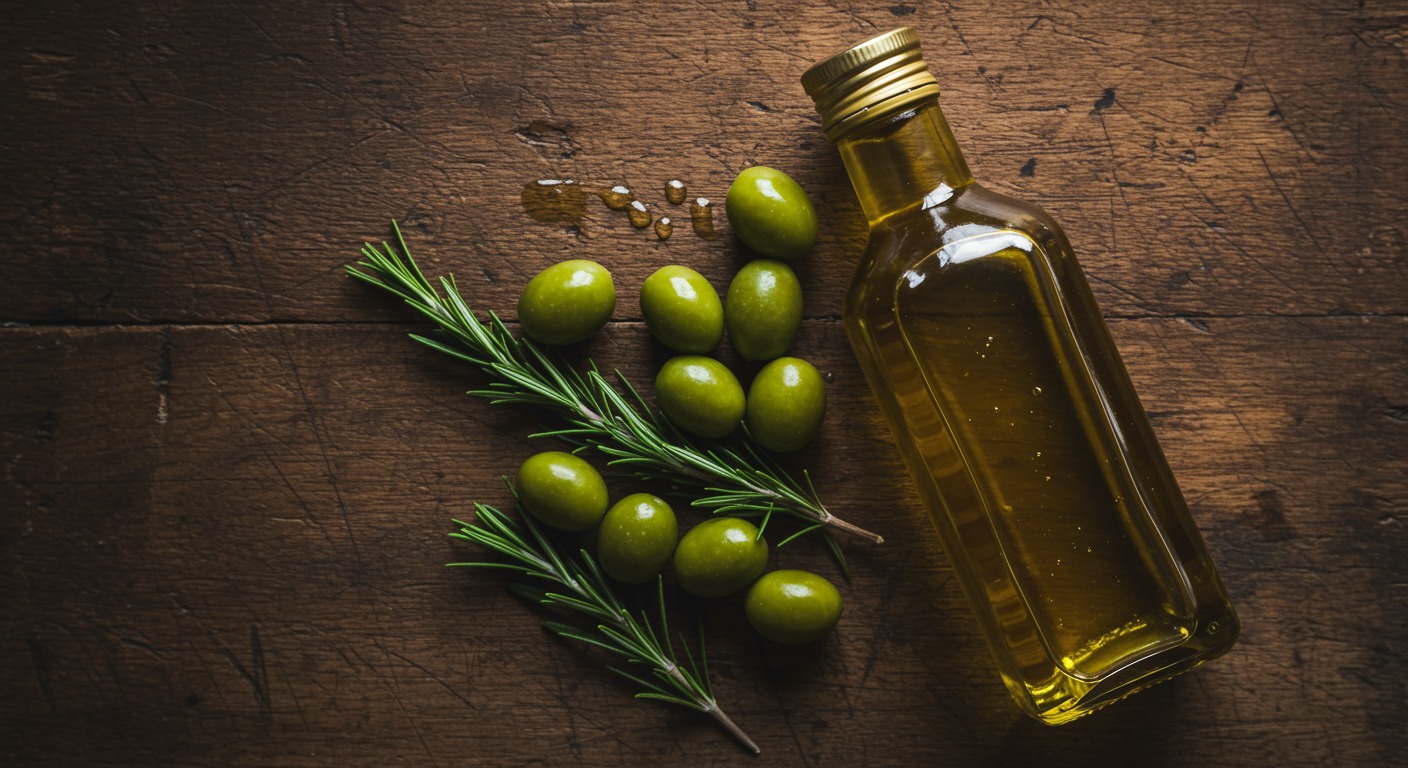
This 2-year study of 656 older adults moves the conversation past “is olive oil good for you” into the far more useful question of which olive oil. People who ate more virgin olive oil held on to better thinking skills, stronger executive function, and sharper language ability over 2 years, and they had a more diverse gut microbiome. People who ate more refined olive oil went the opposite way, with faster cognitive decline and lower microbial diversity. A statistical step called mediation analysis pointed to one bacterium, Adlercreutzia, as a likely link between virgin olive oil and the brain benefits. The practical takeaway is simple: check your label, because “pure olive oil,” “light olive oil,” and just plain “olive oil” without the virgin label are usually refined products with most of the protective polyphenols stripped out.
Key finding: Over 2 years, virgin olive oil was linked to preserved cognition and richer gut bacteria diversity, while refined olive oil was linked to faster cognitive decline.

Extra Daily Steps Can Cancel Out the Health Risks of Sitting Too Much

I love this study because it shifts the conversation from guilt to action. Researchers from the NIH All of Us Research Program followed 15,327 adults wearing Fitbits and looked at how many extra steps it took to offset the higher chronic disease risks of long sitting. The good news: as few as 1,700 extra steps a day, roughly a 15 minute brisk walk, was enough to cancel the excess risk of obesity and fatty liver. For high blood pressure, sleep apnea, type 2 diabetes, COPD, and depression, the dose climbed to about 5,500 additional steps. The reality check is for the heart, where no amount of walking fully erased the risk of long sedentary time. The lesson: walk more, but also sit less.
Key finding: Adding 1,700 to 5,500 daily steps offset the chronic disease risks of long sitting for nearly every condition studied, except coronary artery disease and heart failure.
Treating Gout Properly May Cut Heart Attack and Stroke Risk by Up to 23 Percent

This study reframes how we think about gout. Researchers tracked 109,504 patients on urate-lowering medications like allopurinol, and the results suggest the benefits go well beyond preventing painful joint flares. Patients who got their uric acid below the standard 6 mg/dL target had a 9 percent lower risk of heart attack, stroke, and cardiovascular death. Those who pushed below 5 mg/dL saw a 23 percent reduction. The biggest gains went to patients who already had high cardiovascular risk, which is exactly the population that needs it most. If you have gout, this is a strong reason to take your medication consistently and to know your uric acid number, not just whether your toe is hurting.
Key finding: Lowering uric acid below 5 mg/dL was associated with a 23 percent lower risk of heart attack, stroke, and cardiovascular death across more than 109,000 gout patients.

My book, 2mm, is almost here. It is the story of seven years inside the operating room, where every decision is measured in millimeters and every millimeter matters. If you want to be the first to know when it is available, leave your email at 2mmbook.com.
Stay curious. Stay skeptical. And stay healthy.
Dr. Kumar