
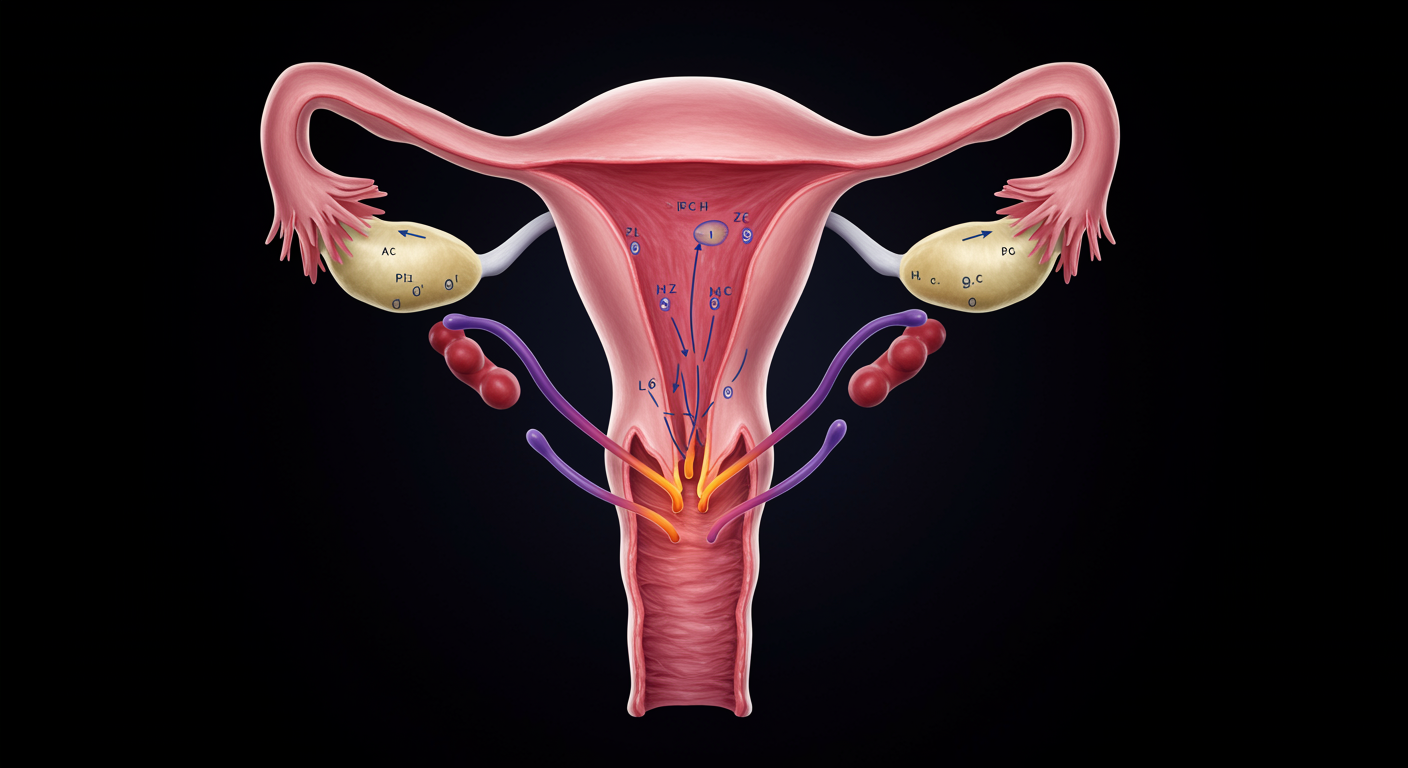
HPA Axis and Depression Across Women's Reproductive Life
How do hormonal changes affect depression risk in women?
Hormonal changes across a woman’s reproductive life create vulnerable periods for depression by disrupting the hypothalamic-pituitary-adrenal (HPA) axis stress response system during puberty, menstruation, pregnancy, postpartum, and menopause. These fluctuations explain why women experience depression at twice the rate of men, with specific reproductive transitions creating windows of increased vulnerability.
What the data show:
- Female-to-male depression ratio: 2:1 ratio emerges after puberty, coinciding with HPA axis maturation
- Menstrual cycle vulnerability: 40% increased depression risk during luteal phase when progesterone drops
- Postpartum depression: 15-20% of women experience postpartum depression linked to dramatic HPA axis changes
- Perimenopause risk: Depression risk increases 2-4 times during perimenopause due to hormonal fluctuations
- HPA axis hyperactivity: Found in 60-80% of women with reproductive-related depression
- Vulnerable periods: Puberty, menstrual cycles, pregnancy, postpartum, and menopause all represent times of increased depression risk
- Mechanism: Reproductive hormones (estrogen and progesterone) modulate the HPA axis stress response system - estrogen generally enhances stress resilience while progesterone withdrawal can trigger HPA hyperactivity, leading to excessive cortisol production; during reproductive transitions, rapid hormonal changes destabilize the HPA axis, creating windows of vulnerability for depression
Dr. Kumar’s Take
Understanding the HPA axis in women’s mental health is crucial for personalized depression care. The dramatic hormonal shifts women experience aren’t just “normal life events” - they represent real biological challenges to stress response systems that can trigger or worsen depression. This knowledge helps us time interventions better, choose appropriate treatments, and validate women’s experiences of mood changes during reproductive transitions.