Neuroplasticity

Neuroplasticity

Articles tagged with "Neuroplasticity".

5HT2A Receptors in Brain's Anterior Cingulate: Key to Psychedelic Therapy

Tags: 5HT2A Receptors, Anterior Cingulate Cortex, Psychedelic Mechanisms, Neuroplasticity

November 23, 2025

How Do 5HT2A Receptors in the Brain’s Anterior Cingulate Drive Psychedelic Therapy?

A comprehensive scoping review examines the therapeutic effects of 5HT2A receptor activation in the anterior cingulate cortex (ACC) and the mechanisms underlying psychedelic drugs’ antidepressant and anxiolytic effects. The research suggests that 5HT2A receptors in the ACC produce profound changes in excitatory neurotransmission and brain network connectivity, reducing anxious preoccupation and obsessional thoughts while promoting cognitive flexibility and long-lasting mood improvements in anhedonia through complex interactions with glutamate and GABA neurotransmission.

Read more

BDNF in Depression: How Brain Growth Factor Affects Mental Health

Tags: BDNF, Depression Neuroscience, Neuroplasticity, Brain Health

November 23, 2025

How does BDNF affect depression and brain health?

BDNF is a crucial growth factor for brain cells that’s typically reduced in depression, contributing to brain shrinkage and impaired brain plasticity. Restoring BDNF levels through treatment is essential for recovery. Key roles:

  • Brain cell growth - promotes neuron survival, growth, and connections
  • Reduced in depression - lower levels contribute to brain volume loss
  • Neuroplasticity - essential for brain’s ability to change and adapt
  • Recovery marker - restoring BDNF levels helps depression recovery and prevents relapse

Brain-derived neurotrophic factor (BDNF) acts as a crucial “growth factor” for brain cells, promoting neuron survival, growth, and connectivity. In depression, BDNF levels are typically reduced, contributing to brain volume loss and impaired neuroplasticity. Restoring healthy BDNF levels through treatment may be essential for depression recovery and preventing relapse.

Read more

BDNF Levels in Depression: Meta-Analysis Shows Significant Treatment Response

Tags: BDNF, Depression Meta-Analysis, Neuroplasticity, Antidepressant Treatment

November 23, 2025

Do BDNF levels predict depression treatment response?

BDNF levels can predict depression treatment response and track recovery progress. Meta-analysis of 20 studies (1,504 subjects) found BDNF increases significantly after successful treatment.

BDNF (brain-derived neurotrophic factor) is a growth factor that supports brain cell survival and neuroplasticity - higher levels indicate better brain health and treatment response.

What the data show:

  • Effect size: BDNF increases by 0.62 after antidepressant treatment
  • Correlation with symptoms: changes in BDNF directly correlate with depression score improvements (p=0.02)
  • Biomarker value: higher BDNF levels indicate better treatment response
  • Therapeutic target: supports neuroplasticity theory of depression
  • Clinical utility: can monitor treatment progress objectively

A comprehensive meta-analysis found that BDNF levels increase significantly after successful antidepressant treatment, validating BDNF as both a biomarker for monitoring progress and a potential therapeutic target.

Read more

Behavioral Activation Changes Brain Networks in Depression Treatment

Tags: Behavioral Activation, Depression Treatment, Brain Networks, Neuroplasticity

November 23, 2025

How does behavioral activation change the depressed brain?

Behavioral activation therapy strengthens brain networks involved in reward processing and goal-directed behavior, producing measurable neuroplastic changes. Brain imaging shows concrete improvements. Key changes:

  • Strengthens reward circuits - improves brain networks for processing rewards
  • Goal-directed behavior - enhances circuits for motivation and planning
  • Neuroplastic changes - measurable brain network connectivity improvements
  • Dual-level treatment - works at both behavioral and biological levels

Behavioral activation therapy produces measurable changes in brain network connectivity, particularly strengthening circuits involved in reward processing and goal-directed behavior. These neuroplastic changes help explain why increasing pleasant and meaningful activities can effectively treat depression at both the behavioral and biological levels.

Read more

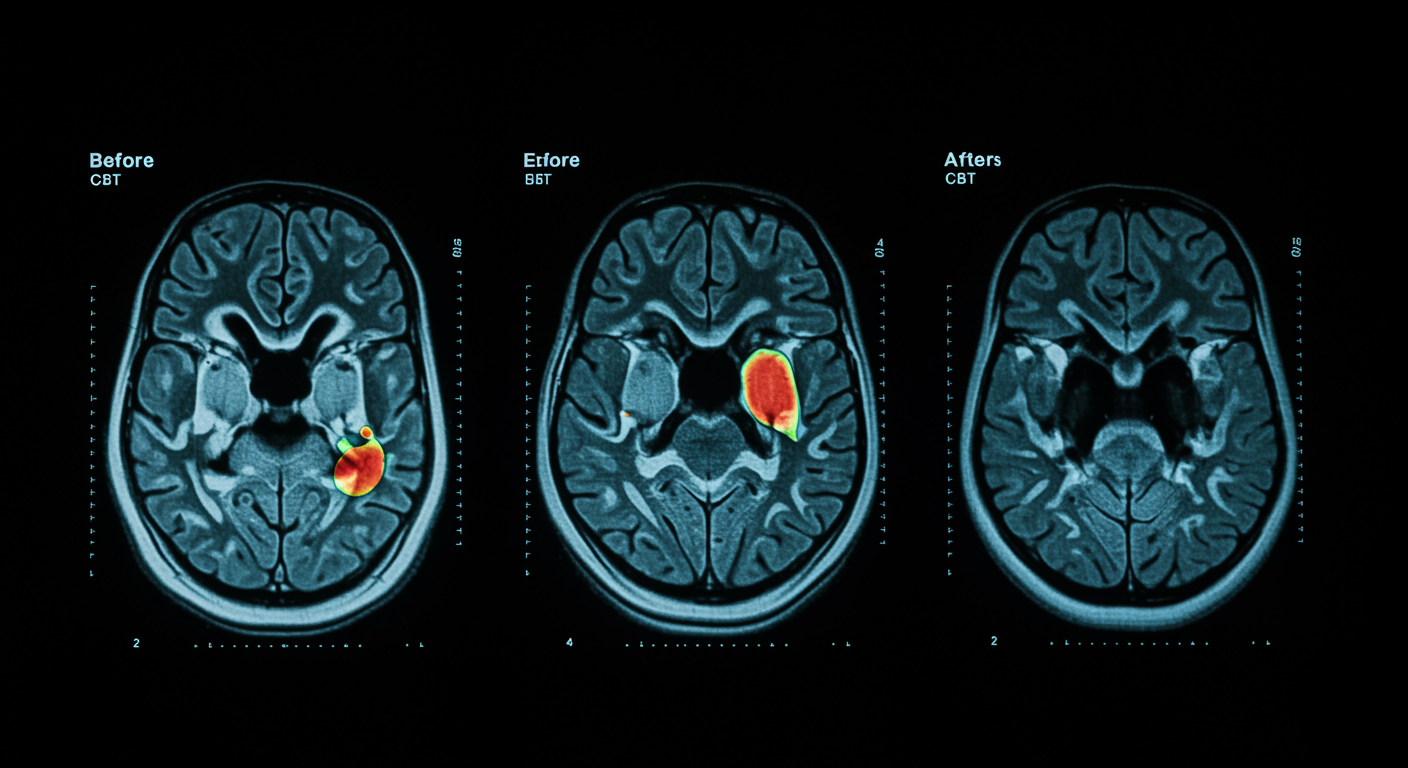
How CBT Changes the Depressed Brain: fMRI Study Reveals Neural Mechanisms

Tags: CBT Brain Changes, FMRI Depression, Cognitive Behavioral Therapy, Neuroplasticity

November 23, 2025

How does CBT change the depressed brain?

Yes. Cognitive behavioral therapy measurably changes brain activity in limbic, striatal, cingulate, and frontal areas, partially normalizing neural patterns associated with depression and reducing negative cognitive biases. A systematic review of 14 task-based fMRI studies published in the Journal of Affective Disorders shows that CBT produces objective, measurable neurobiological changes that correlate with symptom improvement.

What the data show:

  • Limbic system changes: Six out of seven studies found significant alterations in amygdala and hippocampus activity, primarily showing reduced reactivity after CBT
  • Striatal activity: Four out of five studies reported increased activity in reward processing and decreased activity during affective processing and future thinking
  • Cingulate cortex: Six out of nine studies demonstrated altered activity in anterior and posterior cingulate regions, with subgenual anterior cingulate cortex changes most consistently linked to symptom improvement
  • Prefrontal cortex: Seven out of eight studies found significant activity changes in frontal areas involved in emotion regulation and cognitive control
  • Symptom correlation: Brain activity changes in the subgenual anterior cingulate cortex and prefrontal areas show associations with clinical symptom improvement
  • Normalization pattern: CBT appears to reduce limbic hyperactivity while modulating striatal, cingulate, and prefrontal activity to restore more balanced neural processing
  • Mechanism: CBT works by reducing bottom-up limbic hyperactivity (particularly in amygdala and hippocampus), increasing top-down cognitive control from prefrontal regions, enhancing striatal reward responsiveness, and normalizing cingulate activity involved in emotion regulation - these changes collectively reduce negative cognitive biases and restore more adaptive neural processing patterns that support recovery from depression

Dr. Kumar’s Take

This systematic review provides the neurobiological proof that CBT isn’t just “talk therapy” - it’s literally rewiring the brain. The fact that we can see measurable changes in limbic, striatal, cingulate, and frontal areas on fMRI scans is remarkable. These are exactly the brain regions we know are dysfunctional in depression. The limbic system processes emotions, the striatum is involved in motivation and reward, the cingulate cortex handles attention and emotion regulation, and the frontal areas manage executive function and decision-making. CBT is essentially teaching the brain new ways to process information and emotions, and we can now see this happening in real-time through brain imaging.

Read more

How Psychedelics Rewire the Brain's Default Mode Network

Tags: Default Mode Network, Psychedelic Neuroscience, Brain Connectivity, Neuroplasticity

November 23, 2025

How Do Psychedelics Change the Brain’s Default Mode Network?

Psychedelics consistently decrease connectivity within the Default Mode Network while increasing connections between the DMN and other brain networks, creating a more flexible and less rigid brain state that may explain their therapeutic effects. A systematic review of 28 studies published in the International Journal of Neuropsychopharmacology shows that psilocybin, LSD, and ayahuasca all produce similar patterns of DMN modulation, with these changes correlating with ego dissolution experiences and lasting therapeutic benefits.

Read more

LSD for Depression: Mechanisms and Therapeutic Potential Revealed

Tags: LSD Depression, Psychedelic Mechanisms, Treatment-Resistant Depression, Neuroplasticity

November 23, 2025

Can LSD treat depression?

LSD shows promising potential for treating depression by dramatically increasing brain plasticity, especially for treatment-resistant cases. Research reveals complex mechanisms that could revolutionize depression treatment.

LSD works by increasing brain plasticity and neural flexibility, potentially helping treatment-resistant depression where the brain seems stuck in maladaptive patterns.

What the data show:

  • Brain plasticity: low doses drastically enhance neural flexibility
  • Target population: potential breakthrough for treatment-resistant depression
  • Mechanism: works differently than traditional antidepressants
  • Evidence level: strong preclinical evidence from laboratory studies
  • Therapeutic potential: revolutionary alternative for patients who haven’t responded to conventional treatments

A comprehensive review published in Neuroscience & Biobehavioral Reviews examines LSD’s mechanisms and relevance to depression treatment, revealing that psychedelics may offer a revolutionary alternative therapy for patients who haven’t responded to conventional treatments.

Read more

Neurobiological Changes from Mindfulness and Meditation: Systematic Review

Tags: Mindfulness Meditation, Neuroplasticity, Brain Changes, Meditation Neuroscience

November 23, 2025

How Does Mindfulness Meditation Change Your Brain?

A systematic review published in Biomedicines examines the neurobiological changes induced by mindfulness and meditation. This comprehensive analysis investigates how regular mindfulness and meditation practices create measurable structural and functional changes in the brain, providing scientific evidence for the neuroplasticity effects of contemplative practices. The research synthesizes findings from neuroimaging studies to understand how meditation training modifies brain networks, gray matter density, and neural connectivity patterns associated with attention, emotion regulation, and self-awareness.

Read more