
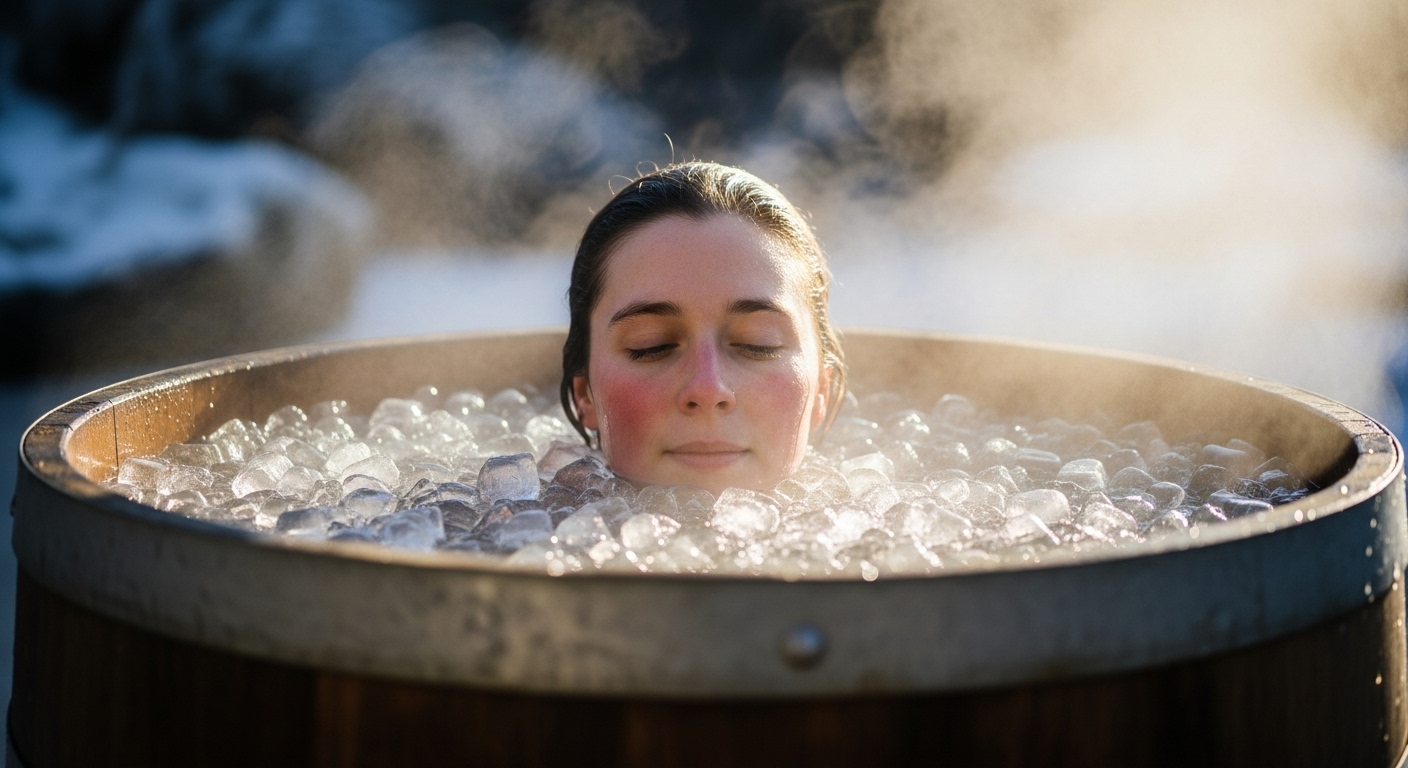
Cold-Water Immersion: Neurohormesis and Clinical Neuroscience Applications
Can Cold Water Immersion Benefit Mental Health Through Neurohormesis?
Yes. Cold water immersion benefits mental health through neurohormesis, triggering beneficial adaptive responses that improve stress resilience, mood, and neural function. Comprehensive review in The Journal of Neuropsychiatry and Clinical Neurosciences shows controlled cold exposure activates multiple therapeutic pathways.
What the data show:
- Hormetic principle: General concept that low-dose stimulation produces beneficial effects while high-dose exposure causes harm, but optimal cold exposure dosing has not yet been determined and varies by individual
- Temperature example: Review describes “brief dip” into 10–15°C (50–59°F) water, but specific duration guidelines not provided
- Safety threshold: Main danger is hypothermia (core body temperature below 35°C/95°F), which causes cognitive impairments
- Therapeutic pathways: Activates norepinephrine release, improves stress adaptation, enhances recovery systems, and may increase neuroplasticity
- Best for: Depression, anxiety, and stress-related conditions seeking natural resilience-building approaches
- Cross-adaptation: When one recovery mechanism is induced by controlled stress, other repair systems also show improved function
- Mechanism: Hormetic stress response where controlled, acute cold exposure triggers beneficial biological plasticity responses that strengthen neural resilience, improve immunological function, and enhance coping mechanisms through well-preserved adaptive pathways
A comprehensive review published in The Journal of Neuropsychiatry and Clinical Neurosciences explores cold-water immersion as neurohormesis and its possible implications for clinical neurosciences. Hormesis is an important evolutionary and physiological concept encompassing stress countermeasures where low-dose stimulation results in beneficial effects while high-dose inhibition produces adverse effects. This biphasic dose response involves well-preserved mechanistic actions and biological plasticity responses that can be induced by acute or moderately stressful stimuli, including temperature exposure, psychological challenges, and exercise.