
Can heat therapy treat depression?
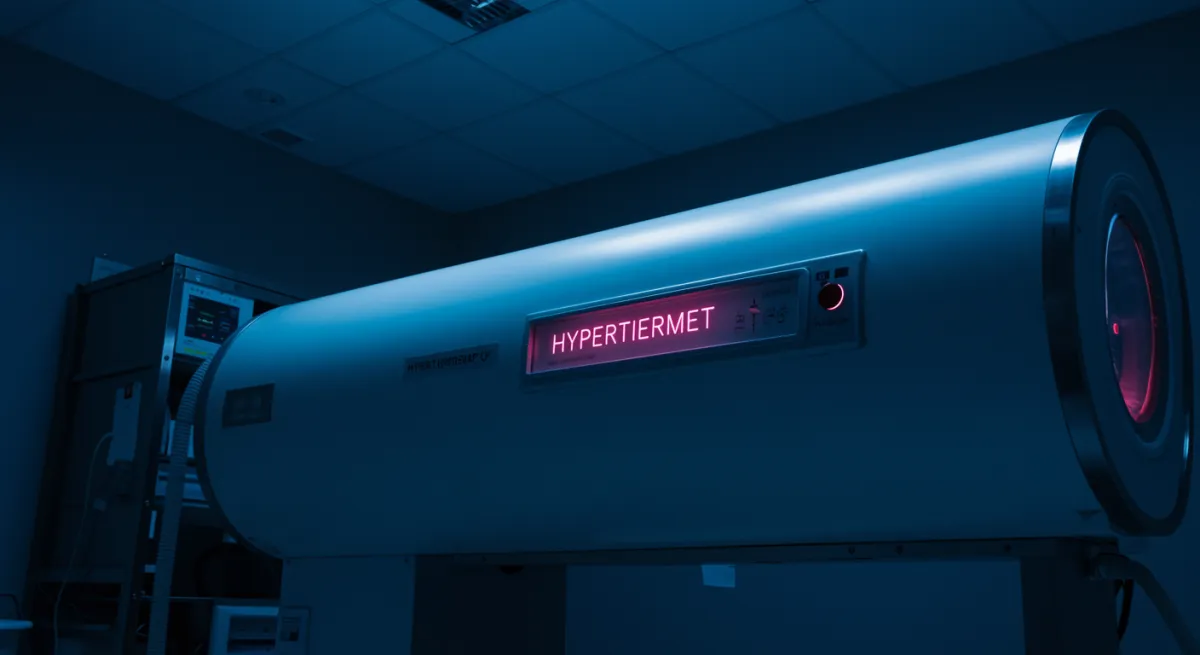
Whole-body hyperthermia produces immediate and persistent improvements in depression symptoms, with effects lasting up to 6 weeks after a single treatment session. A comprehensive review of 11 clinical studies (including 9 randomized controlled trials) found that heat therapy works faster than traditional antidepressants, which typically require weeks to show benefits.
Heat therapy works by temporarily raising body temperature, which activates heat shock proteins, influences inflammatory pathways, and may help restore normal thermoregulation that’s often disrupted in depression.
What the data show:
- Immediate effects: Mood improvements seen within hours to days after treatment, with significant symptom reduction at Week 1 in multiple studies
- Persistent benefits: Effects maintained for up to 6 weeks after a single session, with improvements still significant at Week 6 in several trials
- Study scope: 11 studies reviewed including 9 randomized controlled trials, with sample sizes ranging from 16 to 80 participants per study
- Treatment response: In one study, 11 of 12 patients who completed the protocol no longer met criteria for major depressive disorder
A comprehensive review published in Biomarkers in Neuropsychiatry examines whole-body hyperthermia as a novel antidepressant therapy, synthesizing evidence from multiple clinical trials to evaluate this emerging somatic intervention for major depressive disorder.
Dr. Kumar’s Take
This review highlights one of the most exciting developments in depression treatment - the idea that we can use controlled heat exposure as a therapeutic intervention. What makes whole-body hyperthermia particularly compelling is that it works through completely different mechanisms than traditional antidepressants. Instead of targeting neurotransmitter reuptake, hyperthermia appears to activate heat shock proteins, influence inflammatory pathways, and potentially trigger endorphin release. The fact that studies show both immediate and persistent improvements is remarkable - this suggests we might be able to “reset” certain biological systems with brief, intense interventions rather than requiring daily medications. This could be especially valuable for treatment-resistant depression.
Study Snapshot
This comprehensive review analyzed recent advances in whole-body hyperthermia treatments for major depressive disorder. The researchers examined studies investigating hyperthermia as a somatic antidepressant intervention, evaluating both immediate and long-term effects on mood symptoms. The review synthesized evidence from multiple trials to assess the therapeutic potential and limitations of this novel approach to depression treatment.
Results in Real Numbers
This review analyzed 11 clinical studies investigating whole-body hyperthermia for depression, including 9 randomized controlled trials and 2 non-randomized studies. The studies employed three main approaches: infrared radiation to raise body temperature to approximately 101.3°F (38.5°C), hyperthermic baths at 104°F (40°C), and hot yoga sessions at 105°F for 90 minutes.
The largest randomized controlled trial by Janssen and colleagues included 34 patients with major depressive disorder who received either a single session of whole-body hyperthermia or a sham treatment. The hyperthermia group showed greater improvements in depression scores compared to sham at Week 1, Week 2, Week 4, and Week 6, demonstrating that a single treatment session can produce benefits lasting 6 weeks. Another study by Nyer and colleagues randomized 80 patients to either hot yoga sessions twice weekly for 8 weeks or a waitlist control, finding that the hot yoga group experienced quicker decreases in depressive symptoms. A feasibility study by Mason and colleagues with 16 patients found that 11 of 12 participants who completed their prescribed hyperthermia sessions no longer met DSM-5 criteria for major depressive disorder at the end of treatment.
Several studies investigated potential biological mechanisms underlying the antidepressant effects. A study by Mac Giollabhui and colleagues with 26 patients found that whole-body hyperthermia increased the ratio of anti-inflammatory to pro-inflammatory IL-6 signaling immediately after treatment, and this ratio correlated with decreased depressive symptoms at weeks 1, 2, 4, and 6. Another study by Flux and colleagues with 30 patients found that the degree of IL-6 elevation immediately after treatment correlated with symptom improvement at 6 weeks. However, the review noted that studies are often limited by small sample sizes (ranging from 16 to 80 participants) and exclusion of patients with medical comorbidities, indicating the need for larger, more diverse clinical trials to fully establish the therapeutic potential of hyperthermia for depression.
Who Benefits Most
Patients with major depressive disorder who have not responded adequately to first-line treatments may benefit most from whole-body hyperthermia therapy. Individuals seeking rapid-acting antidepressant interventions may find hyperthermia particularly valuable given its immediate effects.
People who experience significant side effects from antidepressant medications may be ideal candidates for this somatic intervention. Those interested in novel, non-pharmaceutical approaches to depression treatment may find whole-body hyperthermia appealing as an alternative or complementary therapy.
Safety, Limits, and Caveats
The review noted that studies are often limited by small sample sizes and specific selection criteria, which may limit the generalizability of findings. Whole-body hyperthermia requires specialized equipment and medical supervision, potentially limiting accessibility compared to conventional treatments.
Individual tolerance to heat exposure varies significantly, and certain medical conditions may contraindicate hyperthermia therapy. The optimal protocols for treatment frequency, duration, and temperature parameters require further research to establish standardized guidelines.
Practical Takeaways
- Consider whole-body hyperthermia as a promising novel approach for treatment-resistant depression or when rapid effects are desired
- Understand that this intervention requires specialized medical facilities and trained personnel rather than being a self-administered treatment
- Recognize the potential for immediate and persistent mood improvements, which may offer advantages over traditional antidepressants
- Discuss this option with healthcare providers who can assess suitability and access to appropriate hyperthermia facilities
- View thermal therapy as part of emerging somatic interventions that may complement existing depression treatments
What This Means for Depression Treatment
This review validates whole-body hyperthermia as a legitimate area of depression research and treatment development, supporting the expansion of somatic interventions beyond traditional approaches. The findings encourage further investigation into thermal therapies and their mechanisms of action in mental health.
The research also highlights the potential for rapid-acting antidepressant interventions that could address the significant delay in symptom improvement seen with conventional medications.
Related Studies and Research
Episode 31: Depression Explained — The Biology Behind the Darkness
Episode 32: Depression Recovery Roadmap: A Step-by-Step, Evidence-Based Plan
Cold-Water Immersion: Neurohormesis and Clinical Applications
FAQs
How quickly does whole-body hyperthermia work for depression?
Studies show that hyperthermia can produce immediate improvements in mood symptoms, offering potential advantages over traditional antidepressants that typically take weeks to show effects.
Is whole-body hyperthermia safe for depression treatment?
When conducted under proper medical supervision with appropriate equipment, hyperthermia appears to be generally safe, though individual medical conditions must be carefully evaluated.
How does hyperthermia compare to traditional antidepressants?
Hyperthermia works through different mechanisms than traditional medications and may offer rapid onset of effects with persistent benefits, potentially providing advantages for certain patients.
Bottom Line
Whole-body hyperthermia represents a promising novel antidepressant therapy with demonstrated immediate and persistent improvements in mood symptoms, offering a valuable addition to the therapeutic arsenal for major depressive disorder.