
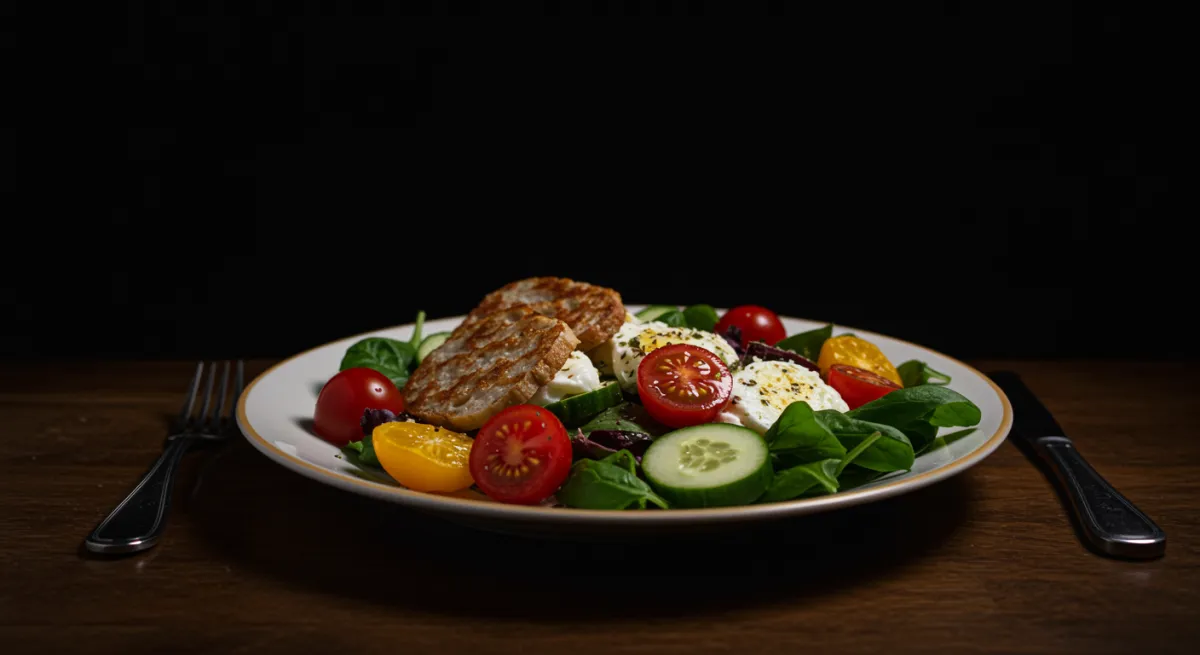
Can diet changes treat depression?
Yes. A Mediterranean-style dietary intervention produces approximately 2.8 times greater improvement in depression symptoms compared to social support, with 32% achieving remission versus 8% in the control group. A randomized controlled trial of 67 adults with major depression found that dietary improvement led to substantial antidepressant effects independent of weight change.
Diet works by providing essential nutrients for brain function, reducing inflammation, and supporting gut-brain axis communication, with food acting as medicine for the brain.
What the data show:
- Effectiveness: Approximately 2.8 times greater improvement in depression symptoms with dietary intervention vs. control, with 42% reduction in MADRS scores vs. 15% reduction in control
- Remission rates: 32% remission with dietary intervention vs. 8% with control (approximately 4 times greater)
- Study scope: First randomized controlled trial of 67 patients (33 diet, 34 control) with 12 weeks of dietary counseling vs. social support
- Clinical relevance: Number needed to treat of 4.1, meaning 1 in 4 patients benefit from dietary intervention
The SMILES (Supporting the Modification of lifestyle In Lowered Emotional States) trial published in BMC Medicine represents groundbreaking research in nutritional psychiatry, demonstrating that structured dietary intervention can significantly improve depressive symptoms in adults with major depression.
Dr. Kumar’s Take
The SMILES trial is absolutely revolutionary because it’s the first randomized controlled trial to demonstrate that dietary intervention alone can treat depression. This fundamentally challenges how we think about mental health treatment. For decades, we’ve known that diet affects mood, but this study proves that changing your diet can actually be a legitimate medical treatment for depression, not just a lifestyle factor. What makes this particularly compelling is that they used a Mediterranean-style diet rich in vegetables, fruits, whole grains, legumes, fish, lean meats, olive oil, and nuts - basically real, whole foods rather than processed junk. The results showed that people who improved their diet had significantly better depression outcomes than those who just received social support. This suggests that food is literally medicine for the brain, and that nutritional psychiatry deserves a place alongside traditional treatments.
Study Snapshot
The SMILES trial was a 12-week randomized controlled trial that assigned adults with major depression to either a dietary intervention group or a social support control group. The dietary intervention focused on a modified Mediterranean diet emphasizing whole foods, vegetables, fruits, whole grains, legumes, fish, lean meats, olive oil, and nuts while reducing processed foods, refined sugars, and unhealthy fats. Participants worked with a clinical dietitian to implement these dietary changes while continuing their existing treatments.
Results in Real Numbers
The randomized controlled trial enrolled 67 participants (33 in dietary support group, 34 in social support control group) with major depressive disorder at two sites in Victoria, Australia (Barwon Health in Geelong and St. Vincent’s Health in Melbourne). The study was conducted over a 3-year period. Participants had moderate to severe depression (MADRS score ≥18) and poor baseline diet quality. Of the enrolled participants, 55 (82%) were utilizing some form of therapy: 21 were using psychotherapy and pharmacotherapy combined, 9 were using exclusively psychotherapy, and 25 were using only pharmacotherapy. 56 participants (83.6%) completed the 12-week intervention, with 31 in the dietary group (93.9% completion) and 25 in the control group (73.5% completion).
Dietary intervention produced approximately 2.8 times greater improvement in depression symptoms compared to social support. MADRS scores improved by approximately 11 points in the dietary group (representing a 42% reduction) versus approximately 4 points in the control group (representing a 15% reduction). The mean difference between groups was 7.1 points on the MADRS, representing a large effect size. 32.3% of dietary participants (10 of 31) achieved remission (MADRS score <10) versus 8.0% of control participants (2 of 25), representing approximately 4 times greater remission rate. The number needed to treat was 4.1, meaning 1 in 4 patients would benefit from dietary intervention. Dietary participants also showed significantly greater improvements in anxiety symptoms (HADS-anxiety) and self-reported depression symptoms (HADS-depression), with improvements independent of weight change, self-efficacy, smoking rates, and physical activity.
Regarding dietary changes, the dietary support group showed significant improvements in consumption of whole grain cereals (+1.21 servings/day), fruit (+0.46 servings/day), dairy (+0.52 servings/day), olive oil (+0.42 servings/day), pulses (+1.40 servings/week), and fish (+1.12 servings/week). Intake of “extras” foods (sweets, processed foods, refined cereals, fried foods, fast foods, processed meats, sugary drinks) substantially declined by 21.76 servings/week in the dietary group. The control group showed no significant changes in any food groups. Changes in dietary quality (ModiMedDiet score) were significantly associated with changes in depression scores, with every 10% increase in dietary adherence associated with a 2.2-point improvement in MADRS scores. The intervention was well-accepted, with 94% completion rate in the dietary group versus 73.5% in the control group.
Who Benefits Most
Adults with major depression who are motivated to make dietary changes may benefit most from nutritional interventions like those used in the SMILES trial. Individuals with poor baseline diets high in processed foods may see particularly dramatic improvements when switching to whole food-based eating patterns.
People seeking complementary approaches to enhance their existing depression treatment may find dietary intervention valuable as an add-on therapy. Those interested in addressing both physical and mental health simultaneously may benefit from the comprehensive health improvements that come with better nutrition.
Safety, Limits, and Caveats
While the SMILES trial showed impressive results, dietary intervention requires motivation, planning, and often significant lifestyle changes that may be challenging for some individuals with depression. The intervention required working with a dietitian and making substantial changes to eating patterns over 12 weeks.
The study noted that dietary intervention may be most effective when combined with existing treatments rather than as a replacement for established therapies. Individual responses to dietary changes can vary, and some people may need additional support to implement and maintain dietary improvements.
Practical Takeaways
- Consider adopting a Mediterranean-style diet rich in vegetables, fruits, whole grains, legumes, fish, and olive oil as part of depression treatment
- Focus on reducing processed foods, refined sugars, and unhealthy fats while increasing nutrient-dense whole foods
- Work with a registered dietitian if possible to develop a structured approach to dietary changes for mental health
- View dietary intervention as a complement to, not replacement for, existing depression treatments like therapy or medication
- Understand that dietary changes require commitment and planning but can provide significant additional therapeutic benefits
What This Means for Depression Treatment
The SMILES trial establishes nutritional psychiatry as a legitimate field and validates dietary intervention as an evidence-based treatment for depression. The findings support the integration of nutritional counseling into comprehensive mental health care and encourage further research into food-based therapies.
The research also highlights the importance of addressing lifestyle factors as part of holistic depression treatment approaches.
Related Studies and Research
Diet Interventions for Depression: Review and Recommendations
Episode 31: Depression Explained — The Biology Behind the Darkness
Episode 32: Depression Recovery Roadmap: A Step-by-Step, Evidence-Based Plan
FAQs
Can diet alone treat depression?
The SMILES trial showed that dietary intervention can significantly improve depression symptoms and achieve remission in some patients, though it was used alongside existing treatments rather than as a standalone therapy.
What type of diet was used in the SMILES trial?
The intervention used a modified Mediterranean diet emphasizing vegetables, fruits, whole grains, legumes, fish, lean meats, olive oil, and nuts while reducing processed foods and refined sugars.
How quickly did participants see benefits?
The SMILES trial was 12 weeks long, with significant improvements in depression scores observed by the end of the intervention period compared to the control group.
Bottom Line
The landmark SMILES trial demonstrates that dietary improvement can serve as an effective therapeutic intervention for major depression, with Mediterranean-style eating patterns producing significant improvements in depression symptoms and remission rates.