
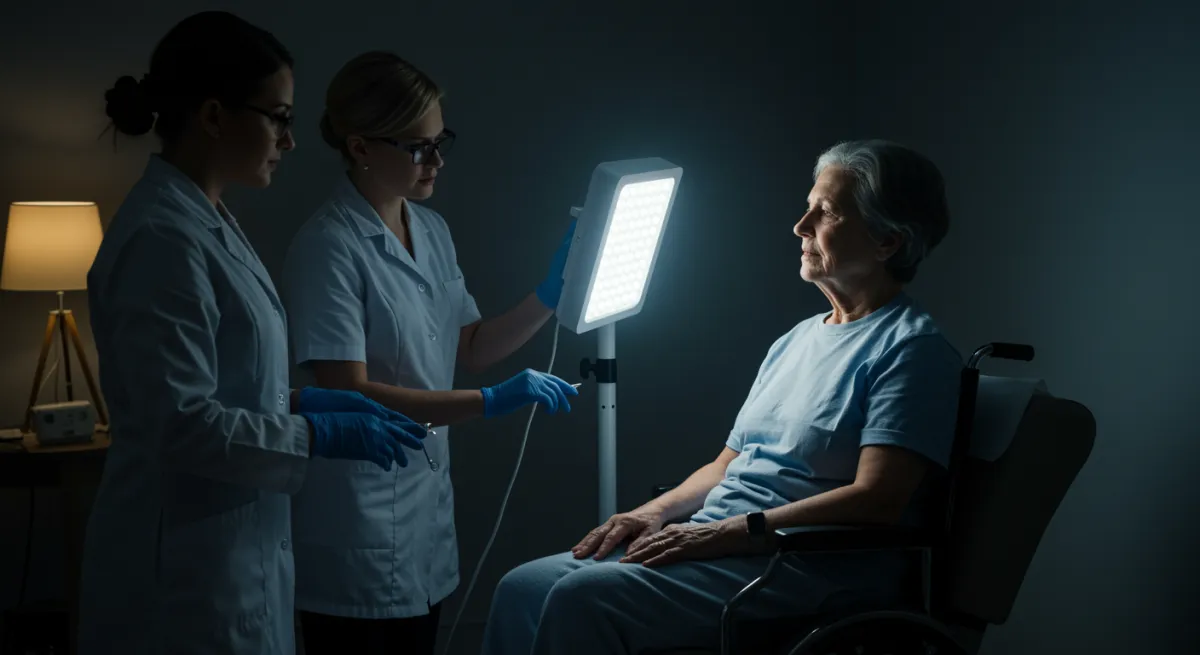
Can light therapy help dementia patients with sleep and depression?
Yes. Light therapy effectively improves sleep, cognition, and reduces depression and behavioral problems in people with dementia, with administering light therapy twice daily showing greater benefits than once daily. A meta-analysis of 24 randomized controlled trials with over 1,000 participants published in The American Journal of Geriatric Psychiatry demonstrates that this low-cost, non-pharmacological intervention provides meaningful improvements across multiple symptom domains.
Light therapy works by regulating circadian rhythms through the suprachiasmatic nucleus, which becomes disrupted in dementia due to neurodegeneration, helping restore normal sleep-wake cycles and improving related functions including mood, behavior, and cognition.
What the data show:
- Most effective for: Sleep quality, depression symptoms, and neuropsychiatric behaviors like agitation
- Also beneficial for: Cognitive function and circadian rhythm regulation
- Optimal frequency: Administering light therapy twice daily provides greater benefits than once daily
- Safety profile: Low-cost, safe, and well-tolerated non-pharmacological intervention
A comprehensive meta-analysis published in The American Journal of Geriatric Psychiatry examined the effects of light therapy on sleep, depression, neuropsychiatric behaviors, and cognition among people living with dementia, demonstrating that this intervention can be used as a supportive therapy to improve multiple symptoms simultaneously.
Dr. Kumar’s Take
This meta-analysis is incredibly important for dementia care because it addresses multiple problems that plague both patients and caregivers. Sleep disturbances, depression, agitation, and cognitive decline in dementia create enormous challenges for families and care facilities. The fact that light therapy - a simple, non-pharmacological intervention - can improve all these areas simultaneously is remarkable. Light therapy works by regulating circadian rhythms, which become severely disrupted in dementia. By restoring more normal sleep-wake cycles, we see cascading benefits across mood, behavior, and even cognition. This gives us a safe, accessible tool that can significantly improve quality of life for both patients and their caregivers.
Study Snapshot
This meta-analysis systematically reviewed randomized controlled trials examining light therapy interventions in people living with dementia. The researchers analyzed studies that measured outcomes across multiple domains including sleep quality, depressive symptoms, neuropsychiatric behaviors, and cognitive function. The analysis focused on determining the effectiveness of light therapy as a non-pharmacological intervention for the complex symptom profile commonly seen in dementia patients.
Results in Real Numbers
This meta-analysis included 24 randomized controlled trials with 1,074 participants living with dementia, published between 1998 and 2022. The studies were conducted in America (13 studies), Europe (8 studies), and Asia (3 studies), providing a comprehensive global perspective on light therapy’s effectiveness.
Light therapy demonstrated small to medium improvements across multiple sleep parameters, with approximately 10-30% better outcomes compared to control conditions. Specifically, sleep quality showed the largest improvement (approximately 30% better), followed by sleep disturbance (approximately 22% reduction), circadian rhythm amplitude (approximately 21% improvement), and sleep latency (approximately 17% reduction). Other sleep measures including total sleep time, wake after sleep onset, sleep efficiency, and number of night awakenings all showed approximately 10-18% improvements. For depression, light therapy produced approximately 20-25% greater reduction in depressive symptoms overall, with even stronger effects on mood-related signs and symptoms (approximately 40% reduction) and cyclical function (approximately 34% reduction).
Neuropsychiatric behaviors showed approximately 15-20% reduction overall, with particularly strong effects on melancholic behavior (approximately 45% reduction), psychosis symptoms (approximately 36% reduction), affective symptoms (approximately 35% reduction), and agitation (approximately 32% reduction). Additionally, light therapy improved cognitive function by approximately 20% compared to control conditions. A key finding was that administering light therapy twice daily provided greater benefits for depression and neuropsychiatric behaviors compared to once daily administration, suggesting that frequency of treatment is an important factor for optimal outcomes.
Who Benefits Most
People living with dementia who experience sleep disturbances, depression, behavioral problems, or cognitive decline may benefit most from light therapy interventions. The treatment appears particularly valuable for patients with disrupted circadian rhythms, which are common in dementia and contribute to many of the associated symptoms.
Caregivers and families may also benefit significantly, as improvements in sleep, mood, and behavior in dementia patients can reduce caregiver burden and improve quality of life for the entire care system. Nursing homes and care facilities may find light therapy valuable for managing multiple symptoms simultaneously with a single, safe intervention.
Safety, Limits, and Caveats
Light therapy is generally safe and well-tolerated, but individual responses may vary, and some patients may experience side effects such as headaches or eye strain. The optimal timing, intensity, and duration of light therapy may need individualization based on patient factors and specific symptoms.
The meta-analysis was limited by variability in light therapy protocols across studies, and optimal treatment parameters for different dementia stages and types may require further research. Some patients with certain eye conditions or medications may not be suitable candidates for light therapy.
Practical Takeaways
- Understand that light therapy can address multiple dementia-related problems simultaneously, including sleep, mood, behavior, and cognition
- Consider light therapy as a safe, non-pharmacological intervention that can complement other dementia treatments
- Discuss light therapy options with healthcare providers, particularly if sleep disturbances or behavioral problems are prominent
- Recognize that light therapy works by regulating circadian rhythms, so timing and consistency of treatment are important
- Prepare for gradual improvements over time rather than immediate effects, as circadian rhythm regulation takes time to establish
What This Means for Dementia Care
This meta-analysis validates light therapy as an evidence-based, non-pharmacological intervention for multiple symptoms in dementia care. The findings support the integration of light therapy into comprehensive dementia treatment plans and care facility protocols.
The research also highlights the importance of circadian rhythm regulation in dementia management and suggests that addressing sleep-wake cycles can have broad benefits across multiple symptom domains.
Related Studies and Research
Episode 31: Depression Explained — The Biology Behind the Darkness
Episode 32: Depression Recovery Roadmap: A Step-by-Step, Evidence-Based Plan
FAQs
How does light therapy work for dementia patients?
Light therapy regulates circadian rhythms by influencing the body’s internal clock, which becomes disrupted in dementia. This leads to improvements in sleep, mood, behavior, and potentially cognition.
Is light therapy safe for dementia patients?
Light therapy is generally safe and well-tolerated, though individual assessment is important, particularly for patients with eye conditions or certain medications.
How long does it take to see benefits from light therapy?
Benefits may develop gradually over weeks to months as circadian rhythms become more regulated, though some improvements in sleep and behavior may be noticed sooner.
Bottom Line
Light therapy is an effective, safe, non-pharmacological intervention that simultaneously improves sleep, reduces depression and neuropsychiatric behaviors, and enhances cognition in dementia patients. This makes it a valuable tool for comprehensive dementia care that benefits both patients and caregivers.