
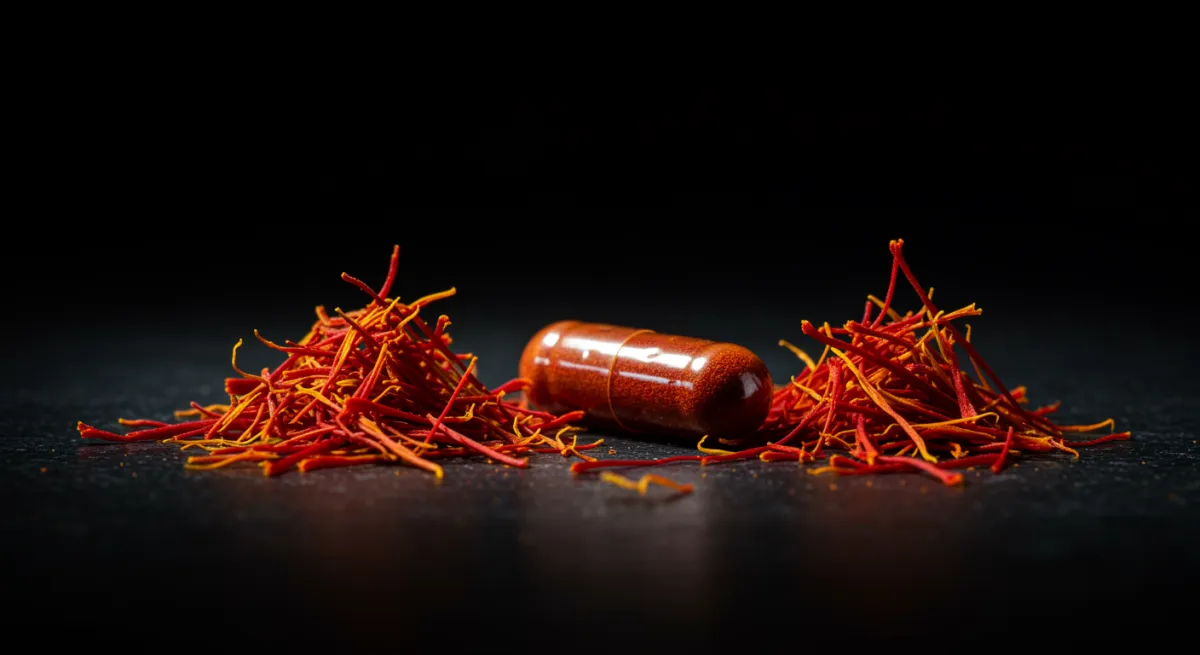
Does saffron help anxiety when added to sertraline?
Yes. Adding saffron to sertraline produces approximately 42% greater reduction in anxiety symptoms compared to sertraline alone. A double-blind randomized controlled trial of 40 patients with mild-to-moderate generalized anxiety disorder found that the combination therapy led to significantly lower anxiety scores after 6 weeks.
Saffron works by blocking serotonin, norepinephrine, and dopamine reuptake, complementing sertraline’s mechanism and providing additional anti-inflammatory and neuroprotective effects.
What the data show:
- Effectiveness: Approximately 42% greater reduction in anxiety symptoms with saffron-sertraline combination vs. sertraline alone
- Symptom improvement: Anxiety scores decreased from 20.2 to 2.95 with saffron vs. 20.4 to 5.05 with placebo
- Study scope: Double-blind randomized trial of 40 patients (20 saffron, 20 placebo) over 6 weeks
- Tolerability: Well-tolerated with only 4 patients reporting mild side effects and no treatment discontinuations
A double-blind randomized controlled trial published in Archives of Neuroscience demonstrates that saffron as an add-on therapy to sertraline provides superior therapeutic benefits for mild-to-moderate generalized anxiety disorder compared to sertraline alone.
Dr. Kumar’s Take
This study represents an excellent example of how we can potentially enhance conventional psychiatric medications with natural compounds. Saffron has well-documented antidepressant and anxiolytic properties, and combining it with sertraline makes pharmacological sense - they work through complementary mechanisms. Sertraline primarily blocks serotonin reuptake, while saffron’s active compounds (crocin, crocetin, and safranal) provide additional serotonin modulation plus anti-inflammatory and neuroprotective effects. This combination approach could potentially allow for lower doses of sertraline while achieving better outcomes, reducing side effects while enhancing therapeutic benefits. It’s a smart strategy for optimizing anxiety treatment.
Study Snapshot
This double-blind, randomized controlled trial investigated saffron as an add-on therapy to sertraline in patients with mild to moderate generalized anxiety disorder. Participants were randomly assigned to receive either sertraline plus saffron or sertraline plus placebo, with researchers measuring anxiety symptoms, side effects, and overall treatment response. The study aimed to determine whether saffron augmentation could enhance the therapeutic effects of sertraline for anxiety disorders.
Results in Real Numbers
The randomized controlled trial enrolled 40 patients with mild-to-moderate generalized anxiety disorder (HAM-A scores of 18-24), with 20 patients assigned to saffron plus sertraline and 20 patients to placebo plus sertraline. Participants had a mean age of 29.7 years in the saffron group and 32.4 years in the placebo group, with 13 women (65%) and 7 men (35%) in each group. All participants received 50 mg sertraline daily, with the intervention group also receiving 450 mg saffron per day for 6 weeks.
Saffron augmentation produced approximately 42% greater reduction in anxiety symptoms compared to sertraline alone. HAM-A scores decreased from 20.20 to 2.95 in the saffron group (an 85% reduction) versus 20.40 to 5.05 in the placebo group (a 75% reduction). The change from baseline was -17.25 points with saffron versus -15.35 points with placebo, showing approximately 12% greater improvement with the combination therapy. At the end of 6 weeks, saffron-treated patients had significantly lower anxiety scores (2.95 vs. 5.05), demonstrating the additive benefit of saffron augmentation.
The combination therapy was well-tolerated, with only 4 patients (20%) in the saffron group reporting side effects: 1 patient with constipation, 1 patient with polydipsia, and 2 patients with headache. All side effects were mild and tolerable, and no patients discontinued treatment due to adverse effects. The study also found that both groups experienced slight weight gain (approximately 1 kg), which is a known side effect of sertraline, but there were no significant differences in weight changes between groups.
Who Benefits Most
Patients with mild to moderate generalized anxiety disorder who have had partial response to sertraline or other SSRIs may benefit most from saffron augmentation. Individuals experiencing side effects from higher doses of sertraline might find that adding saffron allows for effective treatment at lower medication doses.
People interested in integrative approaches that combine conventional medications with natural compounds may be ideal candidates for saffron-sertraline combination therapy. Patients who prefer to minimize synthetic medication exposure while maintaining therapeutic effectiveness may find this augmentation strategy appealing.
Safety, Limits, and Caveats
While the combination was well-tolerated in this study, saffron can interact with certain medications and may not be appropriate for all patients. The study focused specifically on mild to moderate anxiety, and results may not apply to severe anxiety disorders or other psychiatric conditions.
Quality and authenticity of saffron products vary significantly, making it important to use standardized, high-quality preparations. The optimal dosing and timing of saffron in combination with sertraline requires further research to establish definitive guidelines.
Practical Takeaways
- Consider discussing saffron augmentation with healthcare providers if you have partial response to sertraline or other SSRIs for anxiety
- Understand that combination therapy may allow for effective treatment at lower medication doses, potentially reducing side effects
- Choose high-quality, standardized saffron products if pursuing augmentation therapy under medical supervision
- Recognize that this approach represents integrative medicine that combines conventional and natural treatments
- Monitor for both therapeutic benefits and any potential interactions when combining saffron with prescription medications
What This Means for Anxiety Treatment
This study validates the potential for natural compounds to enhance conventional psychiatric medications, supporting the development of integrative treatment approaches for anxiety disorders. The findings suggest that augmentation strategies using well-researched natural compounds like saffron could improve treatment outcomes while potentially reducing medication side effects.
The research also supports the concept of personalized medicine approaches that combine multiple therapeutic modalities to optimize individual treatment responses.
Related Studies and Research
Episode 31: Depression Explained — The Biology Behind the Darkness
Episode 32: Depression Recovery Roadmap: A Step-by-Step, Evidence-Based Plan
FAQs
Is it safe to combine saffron with sertraline?
This study showed the combination was well-tolerated, but always consult healthcare providers before combining any natural supplements with prescription medications.
Could saffron augmentation allow for lower sertraline doses?
The study suggests this possibility, as saffron’s complementary mechanisms may enhance therapeutic effects, potentially allowing for dose optimization.
How does saffron enhance sertraline’s effects?
Saffron provides additional serotonin modulation plus anti-inflammatory and antioxidant effects that complement sertraline’s serotonin reuptake inhibition.
Bottom Line
Saffron as an add-on therapy to sertraline provides superior therapeutic benefits for mild to moderate generalized anxiety disorder compared to sertraline alone, representing a promising integrative approach that combines conventional and natural treatments.