How Long Does Cardiopulmonary Rehab Need to Be for Long COVID?
A 2-week supervised rehabilitation program produces lasting benefits. This study of 200 long COVID patients found VO2max improved by 12% between 2-month and 3-month follow-ups (p<0.05), demonstrating that a short intensive program sets patients on a trajectory of continued recovery.
With an estimated 43% of COVID survivors experiencing long COVID, affecting the working, middle-aged population most severely, researchers at Semmelweis University tested whether a focused rehabilitation program could restore function efficiently.
What the Data Show
Study Population:
- 200 adults enrolled after medical, physical, and mental screening
- 100 intervention group: Received supervised 2-week rehabilitation
- 100 control group: Received single check-up with home program
- Average age: 56.7 ± 12-14 years
- Sex distribution: 43 female, 57 male in each group
- Common comorbidities: Cardiovascular disease (70%), respiratory disease (30%)
Baseline Differences (Intervention vs Control):
| Parameter | Control | Intervention | P-value |
|---|---|---|---|
| FVC (L) | 3.36 | 3.0 | 0.011 |
| FEV1 (L) | 2.82 | 2.51 | 0.006 |
| FEV1 (% predicted) | 92% | 84.88% | <0.001 |
| SpO2 (%) | 98% | 96% | <0.001 |
Follow-Up Improvements (2-month vs 3-month):
| Parameter | 2 Months | 3 Months | P-value |
|---|---|---|---|
| VO2max (ml/min) | 1,276 | 1,429.5 | 0.033 |
| VO2/kg (ml/min/kg) | 14.6 | 16.0 | 0.021 |
Machine Learning Predictors for Rehabilitation Need: Random Forest analysis identified the most important variables:
- SpO2: 76% importance
- PImax (inspiratory pressure): 73.5% importance
- FEV1: 70.5% importance
- 6MWT: 63% importance
- EQ-5D (quality of life): 59.5% importance
Quality of Life: Significant difference in pain/discomfort dimension (control vs intervention): 1.53 vs 1.72 (p=0.009)
Safety: No adverse events recorded during the rehabilitation program.
Dr. Kumar’s Take
This study answers an important practical question: how long should rehabilitation last? The answer appears to be that a well-designed 2-week program is sufficient to create lasting change.
What I find most striking is the continued improvement between 2 and 3 months. Patients weren’t just maintaining gains - they were still getting better. This suggests the rehabilitation “primed” physiological systems to keep adapting even after supervised sessions ended.
The machine learning analysis is valuable for clinicians. Oxygen saturation and inspiratory muscle strength emerged as the strongest predictors for who needs rehabilitation. This could help triage patients appropriately.
For working-age people who can’t afford extended time away from jobs, this finding is significant. A focused 2-week program can deliver results comparable to much longer interventions.
The Rehabilitation Program
Multidisciplinary Team:
- Pulmonologist
- Cardiologist
- Physiotherapist
- Dietitian
- Psychologist
- Social worker
Group Sessions (30 minutes, 3x/day):
- Controlled breathing techniques
- Chest mobility exercises
- Muscle-strengthening with body weight and dumbbells
Individual Sessions (30 minutes, 2x/day):
- Low-intensity continuous training
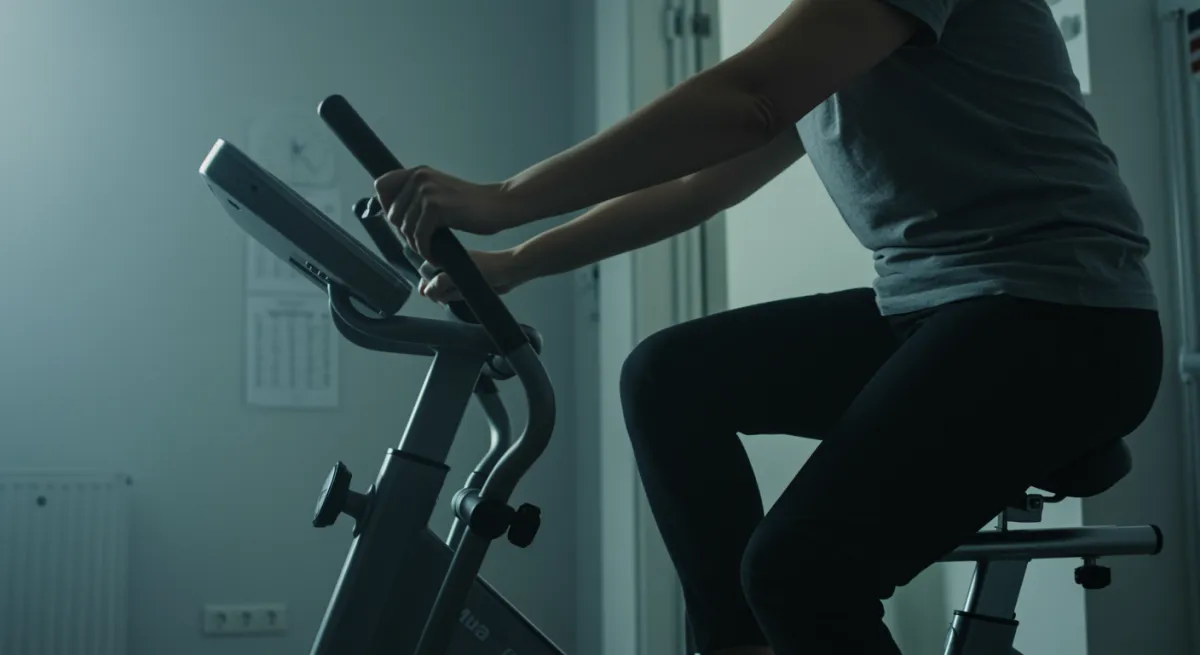
- Equipment: arm ergometer, stationary bicycle, treadmill, or rowing machine
- Intensity: 60-80% of maximal, gradually increased (max 15% weekly increment)
- Tailored to severity, age, comorbidities, and current condition
Program Structure:
- 6-8 participants per small group
- Outpatient format (8 AM to 4 PM daily)
- No hospitalization required
- Constant supervision with blood pressure and SpO2 monitoring
Safety Protocol:
- Low-intensity training chosen due to cardiovascular event risk in long COVID
- High-intensity interval training reserved for severe cases only
- Real-time ECG monitoring during CPET
- Written materials provided for home continuation
Why the Program Works
Short But Intensive: The concentrated 2-week format ensures patients receive substantial supervised practice. By session end, they fully understand proper technique for home continuation.
Individualized Approach: Programs were modified based on:
- Severity of prior COVID-19 infection
- Existing comorbidities
- General health condition
- Current physical parameters
Skills Transfer: A cornerstone of success was ensuring patients could safely perform exercises independently at home. Healthcare professionals verified proper technique before discharge.
Continued Self-Practice: After the 2-week program, participants continued practicing learned exercises daily at home. The improvement between 2 and 3 months reflects this ongoing self-directed training.
Long COVID Symptoms Addressed
Most Common Symptoms at Enrollment:
- Reduced performance
- Shortness of breath
- Productive cough (47-49% in both groups)
- Dyspnoea
- Chest pain (30% in intervention group vs 8% in control)
Underlying Mechanisms: The researchers discuss mitochondrial dysfunction as a potential driver of long COVID fatigue and exercise intolerance. Mitochondria are central to:
- Cellular energy production
- Immune cell function
- Oxygen utilization
Physical rehabilitation may help by improving mitochondrial function and oxygen metabolism.
Practical Applications
Who Needs Rehabilitation Most? Based on machine learning analysis, patients with:
- Lower oxygen saturation (SpO2)
- Reduced inspiratory muscle strength (PImax)
- Lower FEV1
- Shorter 6-minute walk distance
- Lower quality of life scores
These parameters can help clinicians identify patients most likely to benefit from intensive rehabilitation.
Program Duration: The study demonstrates a 2-week program is sufficient for lasting improvement. Longer programs may not be necessary for many patients.
Follow-Up: The researchers recommend:
- 2-month follow-up assessment
- 3-month follow-up assessment
- Telephone or online counseling for maintenance
- In-person meetings if problems arise
Study Limitations
Follow-Up Dropout:
- 27% dropped out by 2-month follow-up (73 of 100 returned)
- 62% dropped out by 3-month follow-up (38 of 100 returned)
- Dropout attributed to recovery and return to work rather than program failure
- 0% dropout during the actual 2-week program
Other Limitations:
- No CPET at start of rehabilitation (only at follow-ups)
- Incomplete vaccination data
- Screening for post-exertional malaise could have been more thorough
Practical Takeaways
- A 2-week intensive program produces lasting cardiopulmonary improvements
- Benefits continue improving for at least 3 months after program completion
- VO2max improved 12% between 2 and 3-month follow-ups
- Multidisciplinary, individualized approach is key to success
- SpO2, PImax, and FEV1 predict rehabilitation need
- Low-intensity exercise is safer than high-intensity for long COVID
- Home continuation of learned exercises supports ongoing gains
- Program is safe with zero adverse events
Related Studies and Research
- Physical Exercise-Based Rehabilitation for Long COVID: Meta-Analysis of 23 Studies
- Exercise Intolerance and Impaired Oxygen Extraction in Long COVID
- Hyperbaric Oxygen Addresses Pathophysiology of Long COVID
- Impact of Aging on Mitochondrial Respiration in Various Organs
FAQs
Is 2 weeks really enough for long COVID rehabilitation?
Based on this study, yes. The 2-week intensive program produced improvements that continued for at least 3 months. VO2max (maximal oxygen consumption) improved significantly between the 2-month and 3-month follow-ups, indicating the body continues adapting after formal rehabilitation ends. The key is that the program is intensive (multiple sessions daily) and teaches patients to continue exercises independently.
What makes some long COVID patients need rehabilitation more than others?
Machine learning analysis identified oxygen saturation (76% importance), inspiratory muscle pressure (73.5%), and FEV1 (70.5%) as the strongest predictors. Patients with lower values in these parameters were more likely to need supervised rehabilitation rather than just home-based programs.
Should I avoid high-intensity exercise with long COVID?
This study specifically chose low-intensity training for safety reasons. Research shows long COVID patients have higher risk of cardiovascular events. The researchers reserved high-intensity interval training only for severe cases under strict supervision. For most patients, 60-80% of maximal intensity appears both safe and effective.
Why did so many patients drop out of follow-up?
The dropout rate reflected success, not failure. Patients who completed rehabilitation returned to work and normal life, making it difficult to attend follow-up appointments. Importantly, 0% dropped out of the actual 2-week program - all enrolled participants completed it. The researchers note this is common in rehabilitation studies when patients recover their function.
Bottom Line
This study from Semmelweis University demonstrates that a 2-week supervised cardiopulmonary rehabilitation program effectively treats long COVID. The intervention group showed significant improvements in VO2max (12% gain between 2 and 3-month follow-ups, p=0.021), indicating that a focused, intensive program sets patients on a trajectory of continued recovery. Machine learning identified oxygen saturation, inspiratory pressure, and FEV1 as key predictors for who needs rehabilitation. The multidisciplinary, individualized approach with emphasis on home continuation appears key to lasting success, all with zero adverse events.