
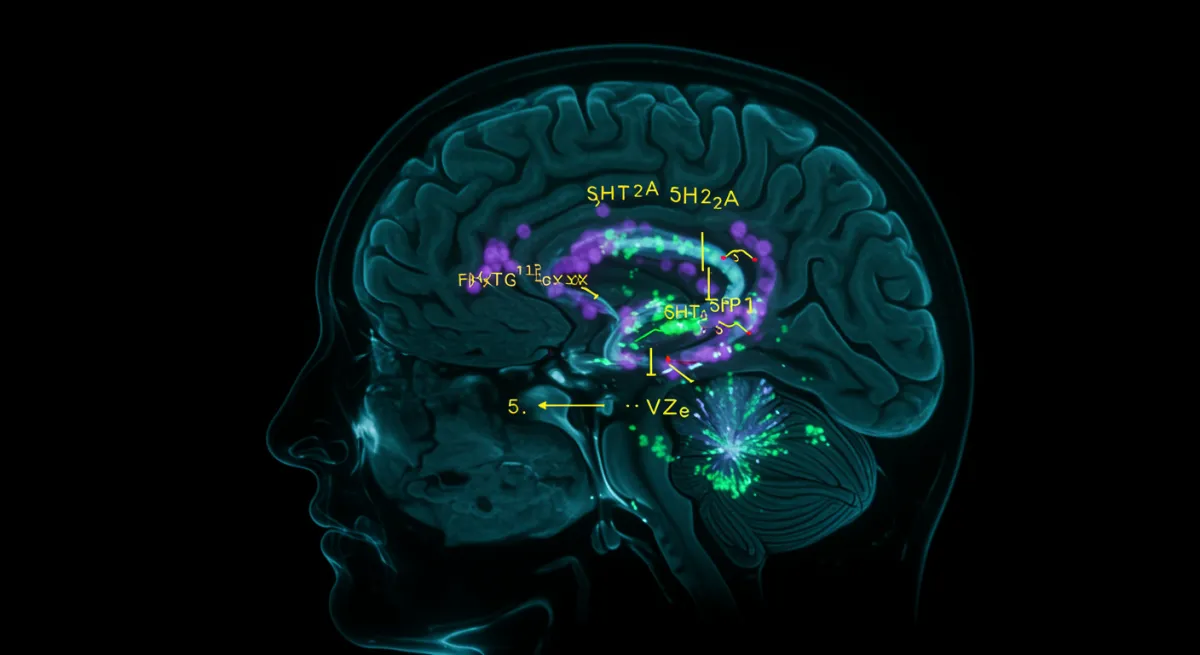
How Do 5HT2A Receptors in the Brain’s Anterior Cingulate Drive Psychedelic Therapy?
A comprehensive scoping review examines the therapeutic effects of 5HT2A receptor activation in the anterior cingulate cortex (ACC) and the mechanisms underlying psychedelic drugs’ antidepressant and anxiolytic effects. The research suggests that 5HT2A receptors in the ACC produce profound changes in excitatory neurotransmission and brain network connectivity, reducing anxious preoccupation and obsessional thoughts while promoting cognitive flexibility and long-lasting mood improvements in anhedonia through complex interactions with glutamate and GABA neurotransmission.
Dr. Kumar’s Take
This review gets to the heart of how psychedelics actually work at the molecular level. The anterior cingulate cortex is like the brain’s emotional control center - it’s involved in attention, emotion regulation, and decision-making. When 5HT2A receptors in this region are activated by psychedelics, it creates a cascade of changes that literally rewire the brain. The enhancement of AMPA receptor signaling and the altered AMPA to NMDA ratio is fascinating because it explains how psychedelics can dismantle old, maladaptive neural connections and help form new, healthier ones. This is the neurobiological basis for why psychedelics can break people out of depression and anxiety patterns that have been resistant to other treatments.
Study Snapshot
This scoping review systematically examined available literature on 5HT2A receptor activation in the anterior cingulate cortex and its therapeutic mechanisms. The review focused on how psychedelic drugs that target 5HT2A receptors produce their antidepressant and anxiolytic effects, with particular attention to the complex interplay between serotonin, glutamate, and GABA neurotransmission systems in the ACC.
Results in Real Numbers
The review revealed that 5HT2A activation in the ACC enhances α-amino-3-hydroxy-5-methyl-4-isoxazolepropionic acid (AMPA) receptor signaling, which alters the ratio of AMPA to N-methyl-D-Aspartate (NMDA) activity. This neurochemical change can dismantle previously established neuronal connections and facilitate the formation of new ones, an effect that may be particularly beneficial for fear extinction and reversal learning.
Psychedelics appear to change both intra- and internetwork connectivity, strengthening connectivity from the dorsal ACC and Salience Network to other brain regions. These connectivity changes correlate with reductions in anxious preoccupation, obsessional thoughts, and anhedonia, while promoting cognitive flexibility and sustained mood improvements.
The complex neurotransmitter interactions in the ACC following 5HT2A activation create conditions that favor neuroplasticity and the formation of new neural pathways, potentially explaining the lasting therapeutic effects observed weeks to months after psychedelic treatment.
Who Benefits Most
Individuals with conditions characterized by rigid thought patterns, anxious preoccupation, and obsessional thinking may benefit most from 5HT2A-mediated changes in the ACC. The review suggests that patients with treatment-resistant depression and anxiety disorders may be particularly responsive to these neurobiological mechanisms.
People experiencing anhedonia (inability to feel pleasure) may find that 5HT2A activation in the ACC helps restore the capacity for positive emotions through enhanced neuroplasticity and improved brain network connectivity. The mechanisms may be especially beneficial for conditions involving fear extinction deficits and cognitive inflexibility.
Safety, Limits, and Caveats
5HT2A receptor activation requires careful clinical supervision due to the profound neurobiological changes involved. The review notes that individual responses to these mechanisms vary significantly, and the optimal protocols for achieving therapeutic neuroplasticity while minimizing risks are still being established.
The complex interplay between neurotransmitter systems means that 5HT2A activation may have different effects in individuals with varying baseline neurotransmitter function or genetic variations in receptor expression.
Practical Takeaways
- Understand that psychedelic therapy works through specific neurobiological mechanisms involving 5HT2A receptors in key brain regions
- Recognize that the therapeutic effects result from enhanced neuroplasticity and the ability to form new neural connections
- Consider that 5HT2A activation may be particularly beneficial for conditions involving rigid thought patterns and cognitive inflexibility
- Prepare for the possibility that therapeutic effects may involve temporary disruption of established neural patterns before new, healthier patterns form
- Stay informed about research into optimizing 5HT2A-mediated neuroplasticity for therapeutic benefit
What This Means for Mental Health Treatment
This review provides crucial insights into the specific neurobiological mechanisms underlying psychedelic therapy’s effectiveness. Understanding how 5HT2A receptors in the ACC drive therapeutic changes helps explain why psychedelics can be effective for treatment-resistant conditions.
The research also supports the development of more targeted therapeutic approaches that could potentially harness these mechanisms while minimizing unwanted effects.
Related Studies and Research
Episode 31: Depression Explained — The Biology Behind the Darkness
Episode 32: Depression Recovery Roadmap: A Step-by-Step, Evidence-Based Plan
FAQs
What makes the anterior cingulate cortex important for psychedelic therapy?
The ACC is crucial for emotion regulation, attention, and decision-making. 5HT2A activation in this region can disrupt maladaptive patterns and promote the formation of new, healthier neural connections.
How do 5HT2A receptors change brain chemistry?
5HT2A activation enhances AMPA receptor signaling and alters the AMPA to NMDA ratio, creating conditions that favor neuroplasticity and the dismantling of old neural connections.
Are these brain changes permanent?
The neuroplasticity changes can lead to lasting improvements, but the exact duration and permanence of these changes are still being studied and likely vary between individuals.
Bottom Line
5HT2A receptor activation in the anterior cingulate cortex drives psychedelic therapy’s antidepressant and anxiolytic effects through enhanced neuroplasticity, altered neurotransmitter ratios, and improved brain network connectivity. This neurobiological understanding provides the foundation for developing more targeted and effective psychedelic treatments.