Hi everyone,
This was a packed week. I did a deep dive into creatine on the podcast and came away thinking most of us are dosing it wrong. On the research side, the largest review ever done on cannabis and mental health landed with a clear verdict, a Johns Hopkins pilot trial showed psilocybin blowing nicotine patches out of the water for smoking cessation, and two major studies gave us hard numbers on what changing clocks twice a year actually costs our health. I think you will find a lot of this practically useful.
This Week’s Podcast Spotlight
Episode 36: Stop Taking 5g of Creatine: Here’s Why
This is one I have been wanting to do for a while. Creatine is the most researched supplement in human history, with over 500 peer-reviewed studies, and yet almost everyone takes the same flat dose of 5 grams regardless of body weight. That never made sense to me. A 60 kg woman and a 100 kg man have dramatically different creatine needs, and a weight-based approach (0.1 g per kg per day) is a much smarter strategy.
But what really fascinated me going deep into this research was how far beyond the gym creatine goes. Your body uses 50 to 75% of its entire methylation capacity just to make creatine. That means supplementing with it frees up methyl groups for DNA repair, neurotransmitter production, and detoxification. For anyone with MTHFR variants, this is especially significant. And the brain research is compelling: a 2025 Alzheimer’s pilot trial using 20 grams daily for eight weeks showed an 11% increase in brain creatine and measurable cognitive improvement.
Three practical takeaways from this episode:
- Dose by body weight (0.1 g per kg per day) rather than defaulting to 5 grams. I weigh 80 kg, so I take 8 grams daily. Your number will be different from mine.
- Stick with creatine monohydrate. It is 99% bioavailable, the most studied, and the cheapest. The fancier forms do not outperform it.
- The safety data is extensive: up to 30 grams daily for five years with no adverse effects. The kidney and hair loss concerns do not hold up when you look at the actual research.
This Week in Health Science
Here is what stood out from the research this week. These studies fascinated me, and I think you will find them practically useful.
The Largest Cannabis and Mental Health Review Ever: No Evidence It Works

This one is important, especially right now with cannabis legalization expanding and marketing claims getting bolder. The Lancet Psychiatry published the largest systematic review ever conducted on cannabinoids and mental health: 54 randomized controlled trials spanning 45 years. The verdict was clear. Cannabinoids do not effectively treat anxiety, depression, PTSD, or nearly any other mental health condition. The one exception was cannabis use disorder itself, where cannabinoid treatment showed some promise when paired with therapy.
Key finding: Across 54 randomized trials and 45 years of research, cannabinoids showed no benefit for depression, anxiety, PTSD, or most mental health conditions.
Psilocybin Beat Nicotine Patches 4 to 1 for Quitting Smoking
A Johns Hopkins pilot trial randomized 82 smokers to either a single psilocybin session or standard nicotine patch therapy. Both groups also received 13 weeks of cognitive behavioral therapy. At six months, 40.5% of the psilocybin group had stayed smoke-free, compared to just 10% in the patch group. That is more than six times the odds of quitting. This is still a small pilot, but a four-fold difference in quit rates is not something we see often in addiction medicine. No serious adverse events were reported in either group.
Key finding: 40.5% prolonged abstinence with psilocybin vs. 10% with nicotine patches at 6 months, giving psilocybin more than 6x greater odds of sustained quitting.
Cannabis Disrupted 15 Out of 21 Memory Measures in a Single Session
Most cannabis memory research tests one type of recall. This randomized, double-blind study of 120 regular users tested 21 different memory measures at once, and THC disrupted 15 of them. Verbal memory, spatial memory, prospective memory, source memory, and even false memory were all affected. Perhaps the most surprising finding: 20 mg of THC caused impairments similar to 40 mg, suggesting a ceiling effect where even moderate doses push memory function to its impaired limit.
Key finding: THC disrupted 15 out of 21 memory measures, with moderate doses (20 mg) causing impairments comparable to higher doses (40 mg).
Vitamin D Did Not Help Acute COVID, but May Reduce Long COVID
A randomized trial of 1,747 adults found that 3,200 IU of vitamin D3 daily did not reduce COVID-19 severity or healthcare use. On its primary outcome, the answer was clear: no benefit. But the secondary analysis was more interesting. Participants who consistently took vitamin D were less likely to report long COVID symptoms at eight weeks (21% vs. 25% in the placebo group). That is a modest difference, but if it holds up, it could offer a simple, low-cost strategy for one of the pandemic’s most frustrating legacies. In my view, the dose here (3,200 IU) is a maintenance dose, not a therapeutic one, so this may tell us more about dosing strategy than about vitamin D itself.
Key finding: No benefit for acute COVID-19, but consistent vitamin D use was associated with lower long COVID rates (21% vs. 25%).
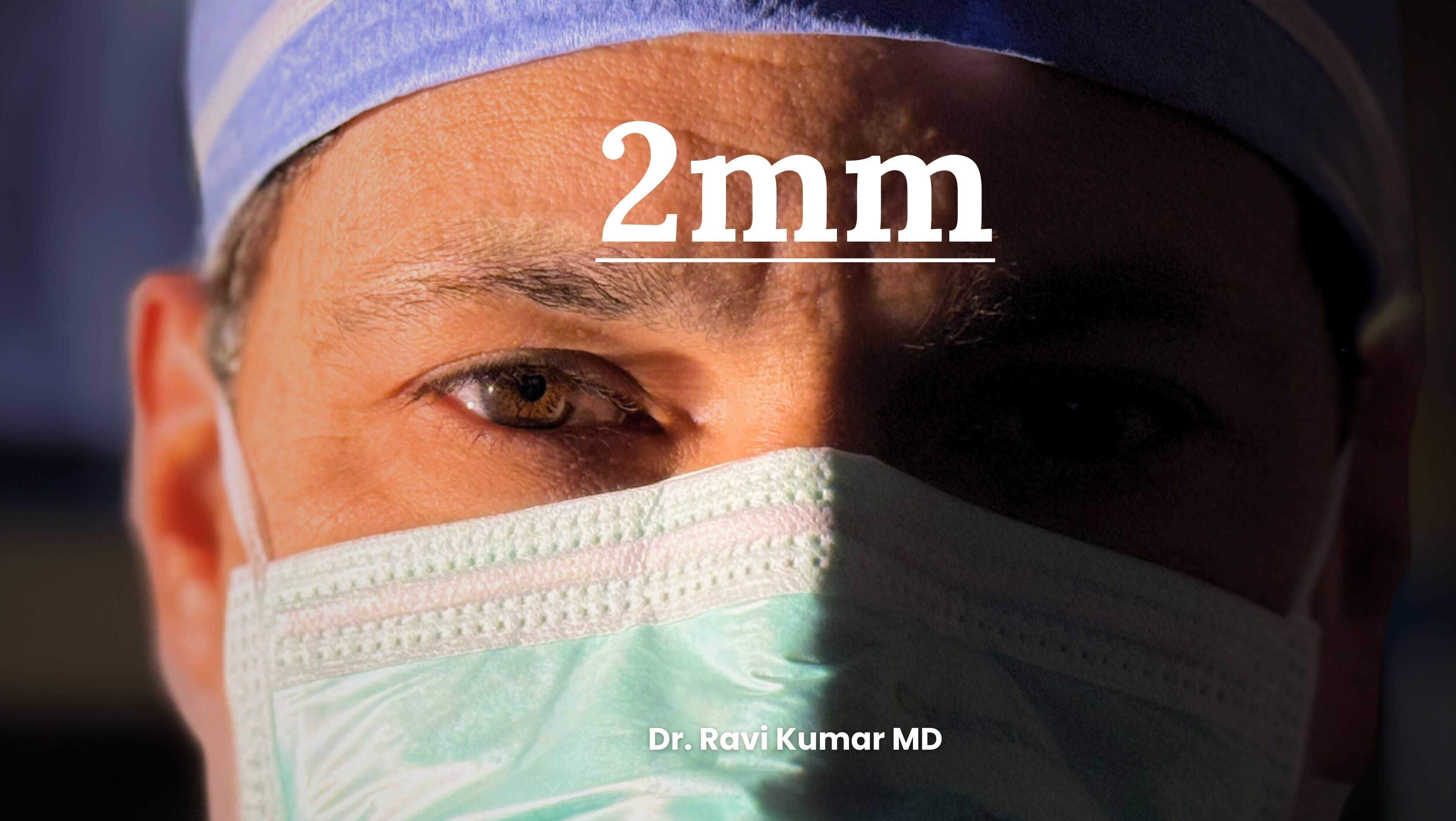
My book, 2mm, is almost here. It is the story of seven years inside the operating room, where every decision is measured in millimeters and every millimeter matters. If you want to be the first to know when it is available, leave your email at 2mmbook.com.
Daylight Saving Time: 157 Studies, One Clear Message

A systematic review of 157 studies from 36 countries found that the spring clock change raises the risk of heart attacks and fatal car crashes. But the picture is more nuanced than the usual headlines suggest. Living with DST during summer months may actually lower overall death rates and traffic accidents. The real villain is the transition itself, not necessarily which clock setting we use. If you felt off last week after springing forward, the data backs you up.
Key finding: Spring clock changes increase heart attacks and fatal crashes, but the transition itself causes more harm than either time system.
Stanford: Permanent Standard Time Could Prevent 300,000 Strokes

Building on the DST theme, a Stanford Medicine study modeled the health effects of clock policy across every U.S. county. Their conclusion: switching clocks twice a year produces the worst outcomes of any time policy. Permanent standard time could prevent roughly 300,000 strokes and 2.6 million cases of obesity. Even permanent daylight saving time would capture about two-thirds of those benefits. The key takeaway is that any form of consistency is better than what we have now.
Key finding: Permanent standard time could prevent 300,000 strokes and 2.6 million cases of obesity nationwide. The current clock-switching system performed worst.
Glyphosate Linked to 50% Higher Mortality Risk

A prospective study of 4,740 U.S. adults found that people with the highest urinary glyphosate levels had a 50% higher risk of death compared to those with the lowest levels. For every 1 ng/mL increase in urinary glyphosate, all-cause mortality risk went up 40%. The association was stronger in women. This is observational, so it cannot prove causation, but with glyphosate detectable in the urine of most Americans, these findings deserve serious attention. Choosing organic when possible and washing produce thoroughly are reasonable precautions.
Key finding: Highest glyphosate exposure group had 50% greater mortality risk, with a stronger association in women.
ADHD Brains May Literally Fall Partly Asleep During the Day
This one shifted how I think about ADHD. A study of 32 adults with ADHD and 31 controls found that ADHD brains produce frequent bursts of sleep-like slow wave activity even while fully awake. These micro-intrusions of deep sleep brain waves appeared most often in the frontal cortex, the region responsible for focus, and they statistically explained the attention gap between ADHD and non-ADHD groups. This is not about feeling tired. The brain is briefly slipping into a sleep-like state during tasks requiring sustained attention. The treatment angle is promising too: auditory stimulation that suppresses slow waves could eventually offer a non-medication approach to improving focus.
Key finding: ADHD brains produce sleep-like slow waves during wakefulness that directly drive attention lapses, offering a new non-dopamine explanation for ADHD inattention.
Stay curious. Stay skeptical. And stay healthy.
Dr. Kumar